Editor’s note: Join us this June as we pray for the city of Fuyang in Anhui Province. Fuyang culture is strongly traditional, and most people work in agriculture. Fuyang has many believers, thanks to the rural revival that swept through the area in the 1980s and 90s. Church leaders say they have experienced significant persecution over the last few years, but that God has matured them and their churches through the difficulty.
Meet the Fuyang Leaders
China Partnership: Briefly introduce yourself, your family, and your church.
Song Xile: I am bi-vocational, and serve my church as an elder. My wife and I have one child.
Our church has faced persecution over the last years. During that same period, I had to set aside ministry for a time because of illness.
The last year has been difficult because [after persecution] many were worshiping alone at home. That was not good. Now, we’re trying to gather in person a little more. We are fairly stable, and slowly recovering from persecution. Spiritually, many have grown a great deal.
Hu Laiyang: I’m a member serving in the same church. I have two children.
Zhang Ping: I’m a seminary student, studying theology. My wife and I both grew up in Christian homes, and we have two children. For now, our church is just a “preaching station” because we don’t have a pastor.
Wu Huizhi: My wife and I became Christians in college, through her believing mother. We have several children.
We’ve had a lot of outside pressure these last years, but we’ve also had really good shepherding. I think that is God’s great grace.
I came to faith in college, and my training and theological grounding came through a traditional house church. But after I finished seminary and began serving the church, I was attracted to the Reformed faith. So, I left my traditional house church, hoping to eventually join a Reformed church.
I started out serving a Christian school. Back then, and even still today, Christian schools were springing up all over China. My school was eventually disbanded by the authorities. Now we have been at this church for several years, and I continue to serve our church’s school. Our school’s goal is to educate Christian children so they know God’s word from an early age.
Never miss a story
We’ve had a lot of outside pressure these last years, but we’ve also had really good shepherding. I think that is God’s great grace.
Tan Jianli: Fuyang is my wife’s hometown, and I moved here when we got married. We have very young children, so I’m a little dazed from staying up at night with them. I serve through teaching theology to older students at the Christian school.
Long Christian History
CP: What makes Fuyang unique among Chinese cities?
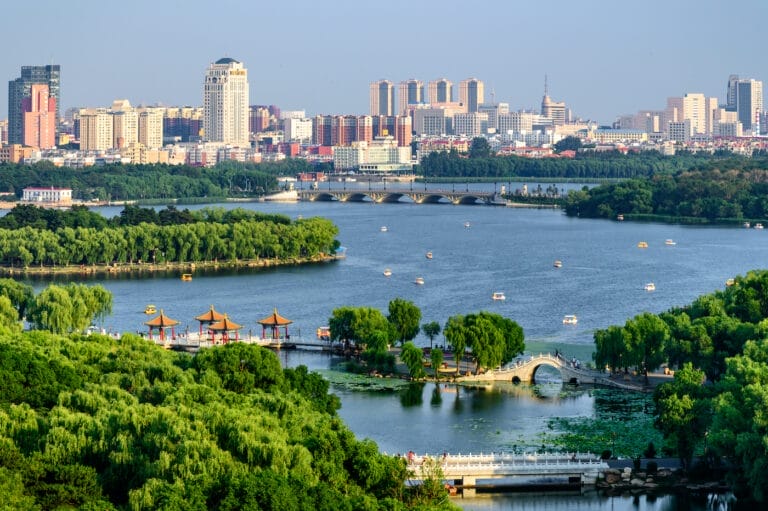
Song Xile: Fuyang is very populous, with more than nine million people. It’s in China’s Central Plains region. Southerners see Fuyang as a northern city; northerners see it as southern. Fuyang sits in between, so the culture is mixed, not really north or south.
Economically, Fuyang hasn’t developed well, and the average income is low. It’s mostly farmland and agriculture; not much industry. Overall, the education level is also pretty low. Not many highly educated or influential people choose to stay in Fuyang.
Fuyang has a long Christian history, and was one of the earliest places in inland China to receive the gospel. I’m a third-generation believer – my grandfather has been a Christian more than 70 years. Many in his generation heard the gospel, but had a weak grasp of the truth. For a Chinese city, Fuyang has a relatively high proportion of believers. But, precisely because so many believe, the depth of faith and its influence on rural background believers isn’t as strong.
Faith Grounded in Rural Revival
Zhang Ping: I grew up in Fuyang as a second-generation believer. Early evangelism here often came out of Henan Province. Watchman Nee’s Little Flock churches were widespread, and fundamentalist teaching was common. The rural revival of the 1970s and 80s brought a wave of conversions among whole families.
Fuyang has a long Christian history, and was one of the earliest places in inland China to receive the gospel.
About 10 to 15 years ago we encountered Reformed teaching, and starting moving toward that. Later, we began pursuing Christian education. Now our church is Reformed Presbyterian in structure and governance. In the past decade, Reformed churches have grown quickly in Fuyang, even as traditional house churches still remain large.
Over the past few years, we have faced persecution. Right now, we meet online, in smaller, in-person groups.
Generational Arc as Christianity Matures
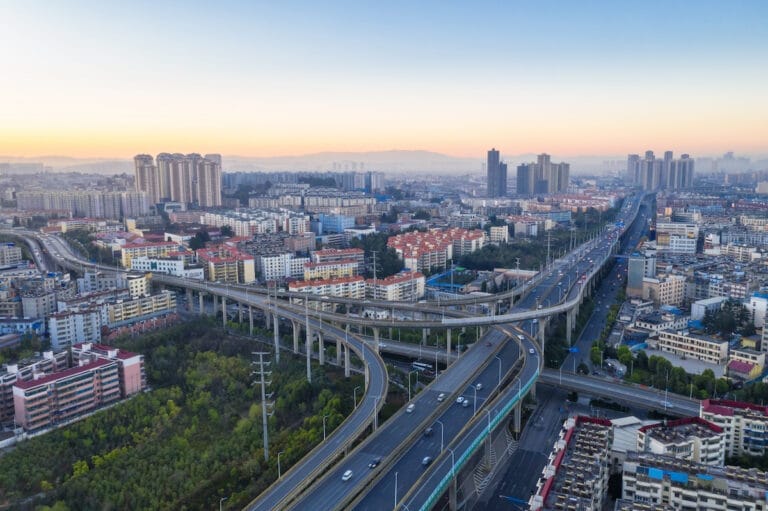
Hu Laiyang: Fuyang is a large city with a big population. Transportation is well-developed, and many people work away from home. Cultural and educational levels are relatively low, income is low, and the economy relies mainly on agriculture, aqua farming, and migrant labor.
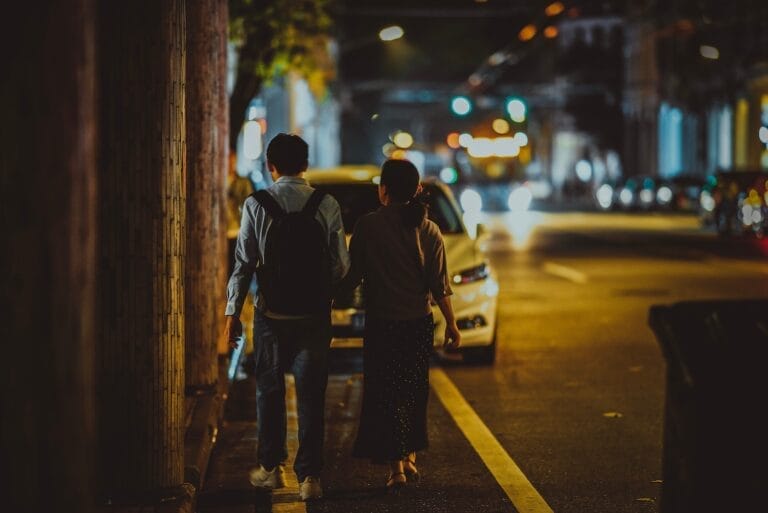
North of the Huai River, most people eat wheat-based foods, but near the Huai, rice is more common. Fuyang has a strong, vibrant night-market and street-life culture.
The China Inland Mission arrived early, in the 1880s, and became the largest Protestant group. By 1937, there were more than two thousand believers. Catholicism also came to this area, but that eventually faded. Older believers tell me gospel work in Fuyang was very vibrant in the 1950s, 60s, and 70s. Believers in those generations were zealous, spreading the gospel widely, preaching throughout Fuyang and surrounding regions.
Believers from that time left many beautiful testimonies to the next generation. Many children of those believers were raised up. As they grew, they focused on Sunday schools, theological training, and church-building. In the 80s, 90s, and 2000s, many young people dedicated themselves to seminary. Fuyang has a seminary that has been running for more than 20 years, and graduates from that seminary are found serving faithfully in Fuyang and across China.
Over the past decade or so, people began coming into contact with Reformed theology. Although the older generation was fervent, passionate, and devoted, their theology was genuinely weak. But in the last 15 or so years, people slowly began establishing Reformed churches, and focusing on theology and church polity. Traditional house churches still make up the majority of Fuyang churches. Other Christians are in the official, government-sanctioned Three-Self church, and some of us are in the Reformed tradition.
Believers from that time left many beautiful testimonies to the next generation. Many children of those believers were raised up. As they grew, they focused on Sunday schools, theological training, and church-building.
The generational arc began with the evangelizing generation, then moved to the theology-building generation, and then to the church-order generation. As the Christian children of the 80s and 90s grew up and began starting their own families, they looked toward the faith of the next generation. They wanted to do more than just build up the children once they were grown, more than just Sunday school. Instead, they hoped that from childhood, through full-time education and participation in Sunday worship, all of it would be a process of glorifying God. So, our generation is building up Christian education.
Reformed Churches: Small but Influential
Wu Huizhi: Fuyang is a third-tier city. Agriculture is the main industry, and there are not many universities, so local education resources are quite limited. Most young people leave Fuyang and go to cities like Shanghai to find work. Others leave for education. As a result, it’s hard for Fuyang to hold on to talented people. When young people leave for work or study, not many come back, because they find more opportunities for work, study, and even ministry in big cities.
Although Reformed churches have been in Fuyang for 15 or so years, these churches are still a minority in the Christian community. Most churches are fundamentalist evangelical, built around a spiritual leader’s life and influence. Reformed churches, with clear confessional statements, theological structure, church constitutions, and formal polity, are few in number. But, although there aren’t as many, Reformed churches have done a lot of work in many areas, especially education. Because of that, Reformed churches have attracted government attention.
Strong Tradition
Tan Jianli: Fuyang people love to eat. There are restaurants everywhere, and popular spots are always packed. People, especially older generations, are very superstitious. During every major holiday, there are all kinds of special rules. I’m from another city, and there aren’t so many rules back home. But here, there are many traditions. For instance, a married daughter returning to her parents’ home has to bring specific gifts, like two fish. There are all kinds of rules like that. I also find that people from older generations strongly prefer sons over daughters. If a married couple doesn’t have children, the older generation finds that very hard to accept.
Song Xile, Hu Laiyang, Zhang Ping, Wu Huizhi, and Tan Jianli are pseudonyms for house church elders and deacons in Fuyang.
Pray for Christians in Fuyang to be encouraged that God is walking with them in a season of pressure and persecution.