Editor’s note: Zhengzhou is the capital of Henan Province in north-central China, and has a population of about 13 million. The city is known as one of the cradles of Chinese civilization. Zhengzhou is an ancient Chinese capital, and the area around the city still has many well-known ruins. House church pastors say there is a vibrant Christian heritage in Zhengzhou, but that, as people have moved to the city from the countryside, churches have struggled to disciple believers through urbanization.
Meet the Pastors
China Partnership: Briefly introduce yourself, your family, and your church.
Pastor Cui: I came to faith as a child, through my mother. I am a Henan native, and came up in a traditional Chinese house church. In college, I joined a student fellowship, where my faith was revived. After graduation, I trained to do full-time ministry.
I got married about a decade ago, and my wife and I have three young children and are church planting in Zhengzhou. We have already begun Sunday worship. Our church came from a traditional house church, but has moved toward Reformed theology.
Pastor Wu: I am also originally from Henan Province. I was born in the 80s, and grew up during Henan’s great rural house church revival. As a child, I followed my mother and believed, but by middle and high school, I drifted. I came to Zhengzhou for college during the student fellowship revival, when large numbers of college students were coming to the Lord. That was when I encountered the gospel.
After graduation, God called me to ministry. My church network works in several provinces. I was sent to serve in other regions for several years. Since coming back to Zhengzhou, I have been planting a church here.
Most people in our congregation are in their 30s and 40s, or even younger. Many are newly married, with young children. My own family has two children, and my wife and I are the only full-time workers.
As Zhengzhou urbanizes, churches face massive shepherding challenges… Churches have to keep re-working and adjusting their inheritance – theology and church-development based on traditions from the last century – to fit the realities of urban church life.
Pastor Lu: I am also from Henan Province, and have been in Zhengzhou more than 20 years. In college I got involved in a campus fellowship, and served there for several years. After that, I started pastoring.
My wife and I have three elementary-aged children. Our family is the only one serving the church full-time, although we have several people studying for ministry, and an elder and deacon team.
Cradle of Chinese Civilization
CP: What makes Zhengzhou unique among Chinese cities?
Never miss a story
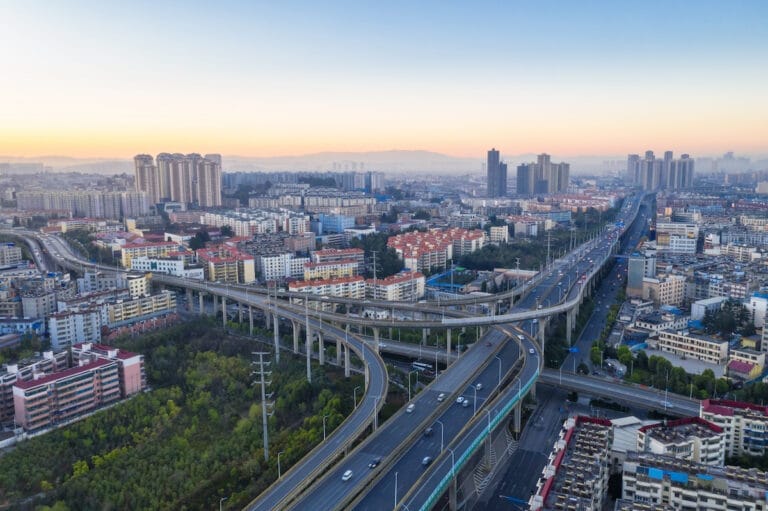
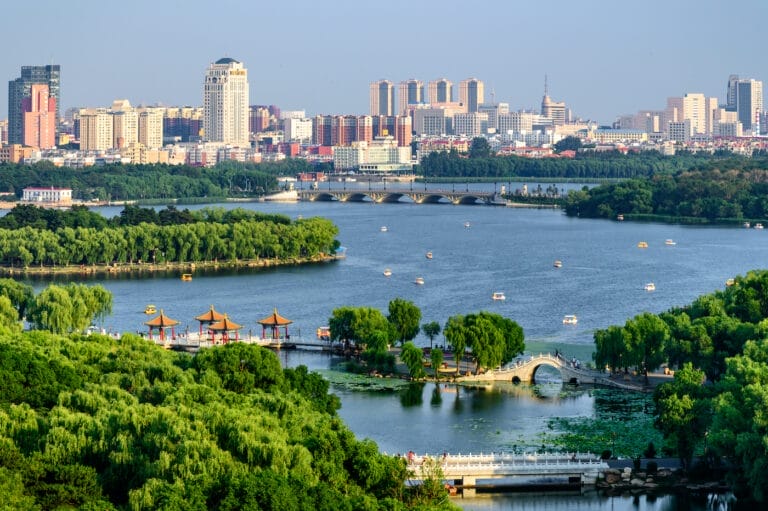
Pastor Cui: Zhengzhou is the capital of Henan Province, and is one of the central cities in the ancient Central Plains region. Zhengzhou sits on the banks of the Yellow River. It is known as the “Center of Heaven and Earth,” and is a cradle of Chinese civilization. Zhengzhou has the Shang Capital ruins, and is home to cultural landmarks like the birthplace of the Yellow Emperor and the Shaolin Temple.
Zhengzhou came of age as China’s railways expanded, when Henan’s capital moved from Kaifeng to Zhengzhou. The north-south Beijing Guangzhou Railway intersects here with the east-west Longhai Railway. Zhengzhou quickly developed into a transportation hub.
In the last few years there has been a lot of urbanization. College grads stayed to work, and migrant workers settled down. In Zhengzhou, ancient and modern run into each other. But, compared to coastal cities like Beijing or Shanghai or Guangzhou, Zhengzhou is still very much an inland city. It’s not as open or accepting as first-tier cities. Zhengzhou has a solid, down-to-earth character, like you find in northern Chinese cities – yet it is also developing a more open posture.
On the gospel side, back in the 1980s, Henan went through a major gospel revival. At the time, those were mostly rural churches. As the Lord revived them, the gospel revived throughout Henan. As urbanization continued, many believing families from smaller towns ended up in Zhengzhou. They connected, and one by one, formed house churches.
Most Zhengzhou churches have traditional house church backgrounds. There are also outside groups, like Wenzhou churches. Some of those churches are still in the traditional house church system, while others are now independent urban churches. There are also young, urban church plants, and even some churches that left the Three-Self.
Churches here inherited the traits of traditional Chinese house churches. Because many believers moved from the countryside to the city, lots of churches are made up of second- and third-generation believers.
No matter their background, as Zhengzhou urbanizes, churches face massive shepherding challenges. Traditional rural churches need orthodox theology, life-giving preaching, and vibrant fellowship. With the fast pace of city life, believers need guidance in spiritual life, work, marriage, family, and parenting. Churches have to keep re-working and adjusting their inheritance – theology and church-development based on traditions from the last century – to fit the realities of urban church life.
The Challenges of City Life
Pastor Wu: Zhengzhou’s economy and level of openness are not as strong as in coastal cities. Zhengzhou also doesn’t have many cutting-edge, high-end industries. So, it’s tough for young people to stay and support themselves after college. In the church, believers must nurture and educate their children, and remain committed to church on top of that. So, the sheer grind of work here tends to be heavier.
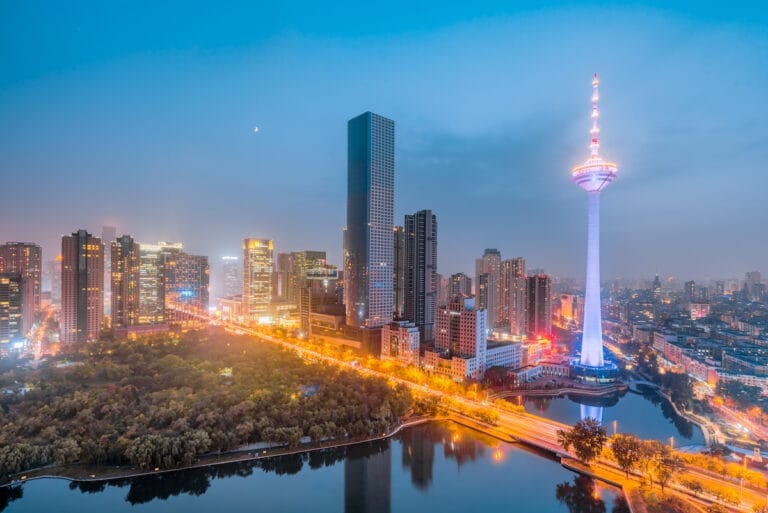
Henan Province is defined by agriculture. Our landmark building captures that – it’s a skyscraper shaped like an ear of corn! Overall, the educational level of the population is lower than in coastal cities. Talent flows toward the coast, so those who stay are more middle-tier – and there are a lot of them.
Churches here inherited the traits of traditional Chinese house churches. Because many believers moved from the countryside to the city, lots of churches are made up of second- and third-generation believers.
Zhengzhou has maybe 10 or 20 Wenzhou churches, formed by people who came to do business, then started churches. Those churches tend to be older. Rural believers from various parts of Henan also moved to Zhengzhou, settled, and formed independent churches. Some of those churches don’t connect much with other local churches.
There are also newer churches that began out of campus fellowships. The main challenges those churches face revolve around raising children and Christian education. Building marriages and families brings many challenges. There are also issues around equipping the church in the truth, the economic pressure to survive, and the need for continuous shepherding and theological grounding.
Back in the 1970s and 80s, when China’s religious policies loosened, many people in Henan came to faith. But over the past 40 years, missionary energy declined, and pastoral care hasn’t been able to keep up with the challenges of urban life. We need churches grounded in the truth, with gospel-centered preaching to build up believers. The main challenges are in church structure, serious expository preaching, and raising mature Christians.
Passing the Faith to the Next Generation
Pastor Lu: Culturally, Henan is one of the birthplaces of Chinese civilization. Among other things, there are annual ancestral worship rites at Shizu Mountain.” Zhengzhou has a long, rich heritage of Chinese civilization. More recently, Zhengzhou has highlighted places like the Dahecun Ruins and other archeological sites. There’s deep, historical heritage.
In recent decades, the city has taken a different track than coastal cities. There’s heritage, but modern growth feels like new money. That’s the cultural mix.
When the capital of Henan Province moved from Kaifeng to Zhengzhou, this city really began to develop. In the 70s and 80s, the whole province experienced a great rural gospel revival. Gradually, as migrant workers moved to the cities, urban gospel work began. Wenzhou believers brought the urban church movement here in the 90s.
Back in the 1970s and 80s, when China’s religious policies loosened, many people in Henan came to faith. But over the past 40 years, missionary energy declined, and pastoral care hasn’t been able to keep up…We need churches grounded in the truth.
After the SARS outbreak in 2003, many house churches realized how important Zhengzhou was as a transportation hub. That was a turning point. Many evangelistic networks began coming here. Campus fellowships began to flourish, and house churches started gathering, too. But although people had moved to the city, many had a rural mindset and shepherding model. They didn’t have tools to face the city’s pluralism. As rural churches flowed into the city, new urban churches emerged.
In recent years, especially since the pandemic, many of us have come to see the importance of passing the faith on to the next generation. A lot of young people who came out of student fellowships stayed in Zhengzhou, got married, and had children. Passing the faith on to the next generation matters even more than how we pastor adults in urban pluralism. That’s a very big concern for us.
CP: Are there any missionaries or spiritual forefathers in Zhengzhou’s past who are particularly well-known, whom everyone recognizes?
Pastor Lu: Because Zhengzhou developed relatively late, the gospel first had a stronger foothold in Kaifeng. Very early on, China Inland Mission set up a transit station in Henan, as well as a seminary and schools.
Later, when the environment changed, the missionaries withdrew. The remaining gospel seed was scattered throughout the border regions of Hubei, Henan, and Shanxi. There were still quite a few older believers left in those places. John Sung also visited Henan, but people say he didn’t feel the hearts of people here were especially open to the gospel.
Pastor Cui, Pastor Wu, and Pastor Lu are pseudonyms for house church leaders in Zhengzhou, Henan Province.
Pray for churches in Zhengzhou to have wisdom in discipling people to follow God in the midst of busy urban life.