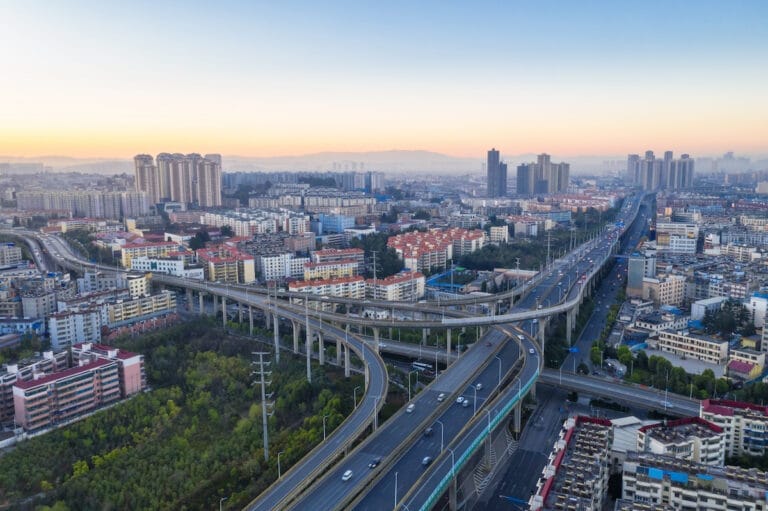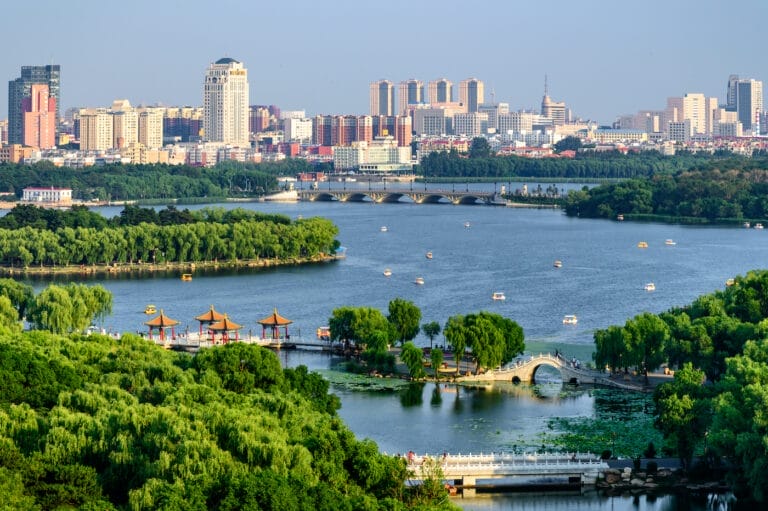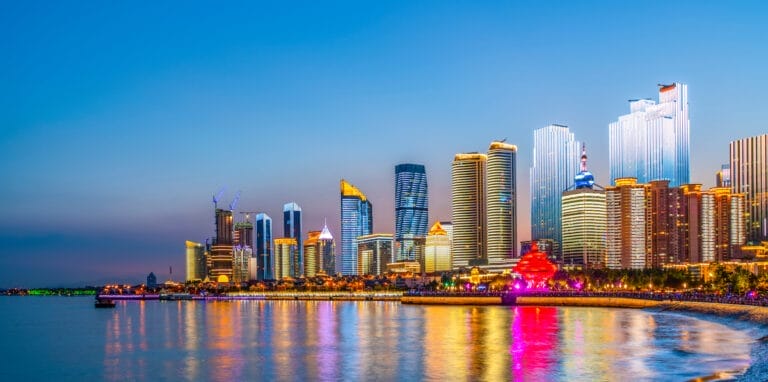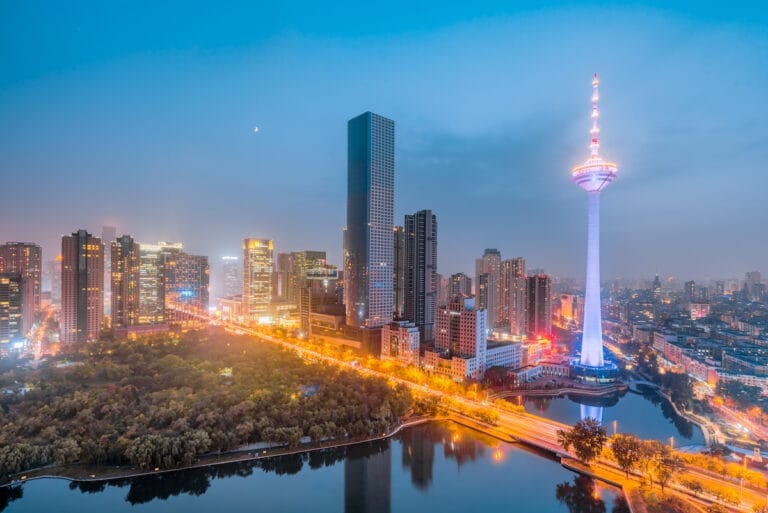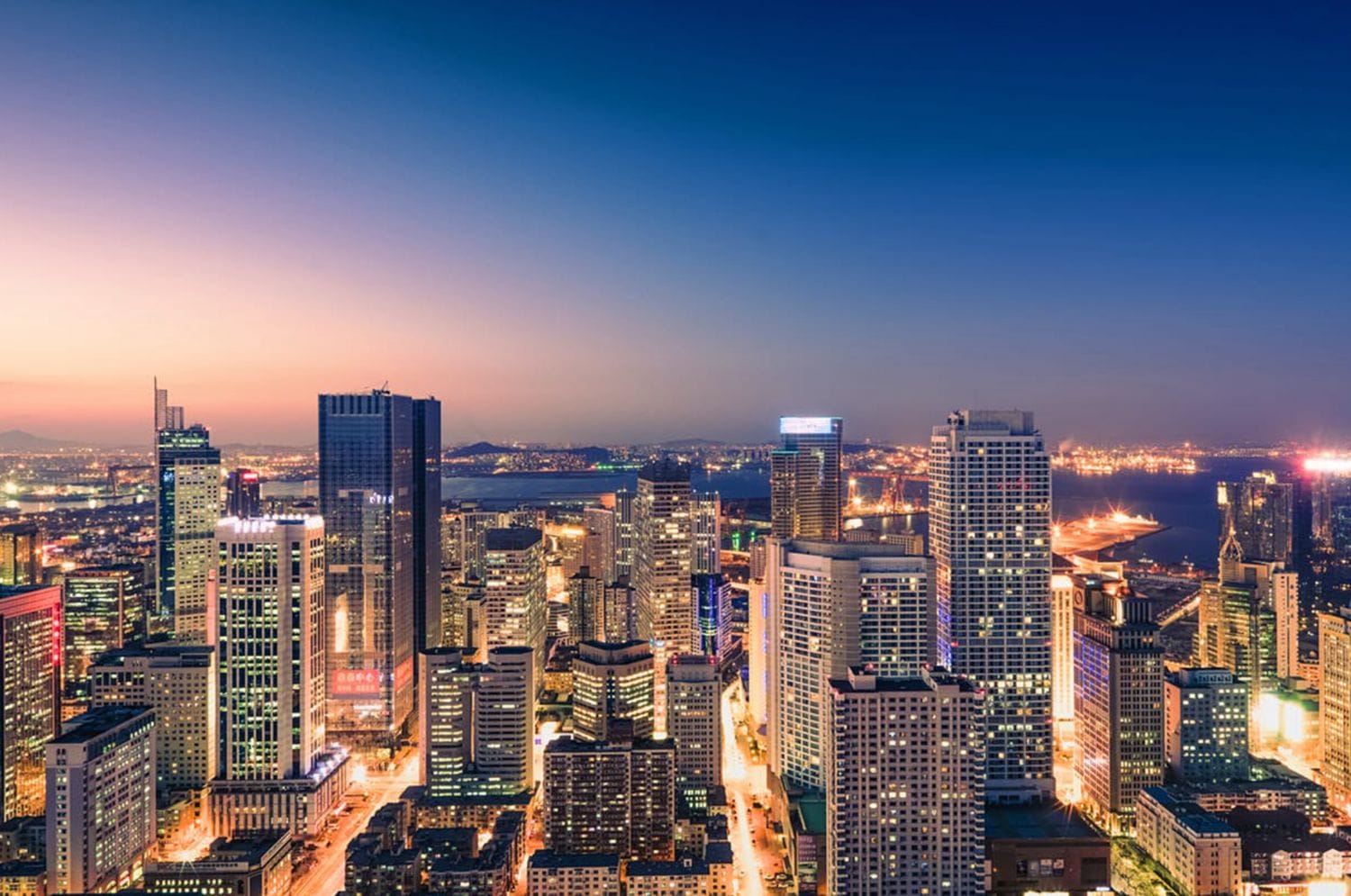
Editor’s note: This month we are praying for Yantai, in Shandong Province. Yantai is a port city on the Yellow Sea. In 1861, Yantai was opened to trade as a treaty port city. In those days, the city was known in the West as Chefoo, after the island which guards the deepwater harbor. Unlike Shanghai or Guangzhou, Yantai did not have a foreign concession, but many foreigners –including missionaries — quickly settled in the city. Modern church leaders say Yantai is still blessed by the heritage those early missionaries left behind.
Early Treaty Port
China Partnership: Tell me about the gospel history of Yantai.
Zhang Anwei: Yantai was one of the earlier cities to open as a treaty port, so the city was deeply shaped by Western missionaries, even down to the cherries and apples and peanuts [for which Yantai is famous].
Yantai had a retirement compound for missionaries. Hudson Taylor and those who worked with him came here, and Calvin Mateer and John Nevius gave the greater part of their lives to Yantai.
Because of the church’s influence on the city, ordinary people had a warm feeling toward Christianity and the church.
Missionary Influence
Yu Kangxi: My area of Yantai is a rural county that was strongly shaped by Baptist missionaries. Jesse Boardman Hartwell came to Yantai in 1864. Later, C.W. Pruitt, another Southern Baptist missionary, also came, and their influence grew a lot. Pruitt worked in Longkou, and the Baptist church there developed a great deal, with more than 1,900 members at its height.
Historically, the local church focused on education, and ran schools that influenced a great many people. Through this work, many people came to believe in Jesus.
Later, the church in Yantai went through Japan’s invasion of China (which was a time of suppression), then through the Cultural Revolution, and then through the Three-Self movement.
After that series of pressures on the church, this Baptist stronghold of north China was turned into a Three-Self church, and the local church began a slow decline in governance and in teaching. There were still many believers inside the Three-Self churches. Eventually some believers left and, around the 1990s, founded a house church that eventually reached about 300 people. The other house churches were all small.
Yantai enjoyed the good of the gospel. At its height, Yantai had more church buildings than it had streets. This was once a city that received the good of the gospel deeply.
The early missionaries to Yantai served the people of that time through education and medicine. Because of the church’s influence on the city, ordinary people had a warm feeling toward Christianity and the church. Today, the older generation still has this feeling.
The missionaries themselves were very godly, in the way they governed the church and in everything else. Later, in the 90s when house churches began to rise, those who led the churches brought revival because they pursued godliness and evangelism with unusual earnestness and zeal.
Never miss a story
Gospel Riches
Sister Wen: Because Yantai opened as a treaty port, the good of the gospel came with this opening, and missionaries were able to enter. But the missionaries did not merely bring the gospel into Yantai. The missionaries touched agriculture, medicine, culture, education – they shaped the whole city.
Yantai’s earliest good medical care was at Yuhuangding Hospital, which was founded by missionaries. They set up schools, including China’s first school for the deaf and mute. They also started industry, including setting up work for women doing crochet and lace, which was exported to Europe.
Yantai enjoyed the good of the gospel. At its height, Yantai had more church buildings than it had streets. This was once a city that received the good of the gospel deeply.
Yantai has great richness through receiving the good of the gospel. You can still see the city enjoying it today.
We all know about the great Shandong Revival [in the 1920s and 30s]. Yantai was the starting point of that. Many missionaries had to pull out of Nanjing [because of war], so they gathered in Yantai to see what they should do. A southern Baptist pastor began leading local women in Bible study and in deep, repentant prayer – and then the revival began.
I think of Yantai as a hub. Yantai was also a place to equip many missionaries who would go share the gospel further inland, or a place where they rested as they came to Yantai in winter to study. Then, in the summer, they would go out again to serve.
Yantai has great richness through receiving the good of the gospel. You can still see the city enjoying it today. Even though several generations have passed without believing, Yantai is still receiving the blessing God gave this city.
Zhang Anwei, Yu Kangxi, and Sister Wen are pseudonyms for house church leaders in Yantai.
Praise God for the Christian heritage of Yantai, and pray that those living there today would also repent and turn to Jesus.