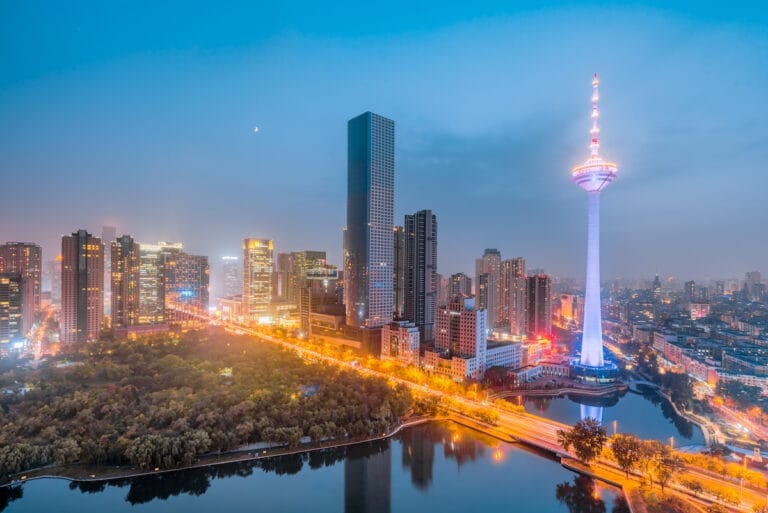
Editor’s note: Xiangtan is city of 3 million in Hunan Province, in south-central China. Xiangtan is famous throughout China for being the hometown of Mao Zedong. Local pastors tell us that, although ministry and evangelism are difficult these days, persecution has deepened the faith of believers in their congregations.
China Partnership: How has Xiangtan changed in the last five years? What changes have occurred in your church?
“The Old Model Cannot Be Sustained”
Brother Hu: In the church, attendance is declining, it’s difficult to shepherd believers, and it’s harder to share the gospel. Especially after the pandemic, evangelism is less and less effective.
Years ago, Xiangtan used to have some pretty big churches – more than 100 or 200 people – with formally trained pastors. But all those churches were absorbed into the state system.
We are tightly constrained, and the difficulty has increased.
Church leaders began to quarrel among themselves – one church that used to have more than a hundred people now has 20. The old church model cannot be sustained any longer. Believers’ lives have not been built up, and we cannot train the next generation of leaders. The old model has reached a dead end. If we don’t establish correct teaching rooted in Christ, the church is like a sinking ship.
Worsening Persecution
Pastor Li: Xiangtan churches have faced intensified persecution these last five years, much like the rest of the nation. It’s regrettable; most of the largest churches in Xiangtan have registered with the government.
Right now, Xiangtan house churches are underground. Most [split into small groups]. Our church used to be public, but after persecution, we’ve dispersed into home gatherings.
Most Xiangtan believers only have a vague understanding of faith foundations. They don’t clearly understand the gospel. They weren’t clear about the Three-Self church – even house church pastors didn’t understand why we should not register. They didn’t understand the root issues.
Campus and youth ministry have shrunk noticeably. There is enormous difficulty doing those. When persecution came, university students were the first “red line.” The Communist Party clearly understands it is competing with the church for talent at universities, so it strictly forbids preaching the gospel on campus. We used to go room-to-room through dorms. Now, that is impossible. We tell main preachers not to go on campus at all, because they are all under surveillance. Several have been followed and monitored. Five years ago, we could run large youth summer camps. Now, we can only do them privately, on a very small scale.
How can society see gospel fruit? We can’t do anything in public. Even if we want to do social kindness and charity, we have no way to carry them out. We are tightly constrained, and the difficulty has increased.
Never miss a story
One good change is that relationships among house churches have eased. We used to function separately, but persecution has led to unity. Because we are all so weak, some older preachers have begun gathering everyone together to build relationships and pray. In the past, people ran in separate directions, but now there has been some softening, some mutual acceptance, some progress.
But the process has been very meandering, because churches are spiritually immature. The churches are somewhat similar to the temperament of Xiangtan people: everyone likes conflict a little too much, is self-focused, and lacks cohesion.
The churches are somewhat similar to the temperament of Xiangtan people: everyone likes conflict a little too much, is self-focused, and lacks cohesion. But we thank God for the recent changes. Believers have changed in their understanding of the gospel.
But we thank God for the recent changes. Believers have changed in their understanding of the gospel. Before, people thought it was enough just to believe in Jesus. Now, their understanding of life, the gospel, Scripture, and transformation are different. They serve more, and their family relationships and intimacy are different.
House churches can no longer gather in large numbers. I myself have clearly committed to the Public Security Bureau that we won’t hold large gatherings. Gatherings are all dispersed, and it’s normal to meet online. When major persecution came, our own church started home gatherings. We lost a lot of people – but later, some came back. Some had weak moments, but later returned. Through persecution, God led us to the home church pattern of the early church. We expect that transition to take several years.
Through this process, believers have grown in their understanding of the gospel and Scripture. Their behavior has changed, too. As we meet in homes, God has called many people to serve in their own small household setting. Scripture says the saints are to be equipped, and each is to do his part. That is God’s will.
Because the scale is smaller, family relationships have improved, and intimacy has increased. Sharing among brothers and sisters and among small groups has become much deeper. People share things that would have been impossible before, because everyone feels like family.
Understanding through Suffering
Brother Yang: Though no one wanted persecution, after persecution, we saw another picture. Just as Pastor Li said: people gained a deeper understanding of truth. Through persecution the church has done a lot of reflection, and there have been many changes.
Though no one wanted persecution, after persecution, we saw another picture. Just as Pastor Li said: people gained a deeper understanding of truth.
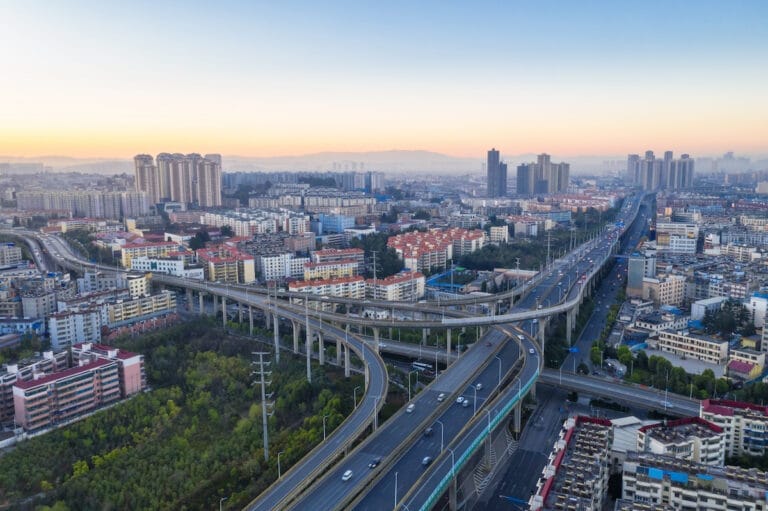
As for the city, in 2023 new transportation lines opened, creating a half-hour circle between Xiangtan, Changsha, and Zhuzhou. Because Changsha and Zhuzhou have more job opportunities, this led to population loss and contributed to Xiangtan’s economic decline. Although transportation is more convenient and the three cities are more integrated, the pace in Xiangtan has slowed down.
Campus Ministry Is Difficult
Brother Tan: Our church is near campus. Campus ministry is across the “red line,” so we are under constant pressure. There have been several especially severe incidents of persecution aimed at students, as well as pressure on teachers who came to faith.
When persecution started, we had to keep looking for places, sometimes meeting outside or in the open countryside. Then, we gradually shifted online. Some host families opened their homes, but because all those families were connected to the school, they were warned.
Later, different families opened their homes. Now we have moved from congregation-style gatherings into meeting in many small places, a hybrid of in-person and online.
The number of people in our church did not change much after persecution, because students are highly mobile anyway. Instead, we’ve actually seen people become more steadfast. Some had not attended gatherings for many years. Others used to preach, but stopped because of family pressure. Now that persecution is worse and the preachers are being watched, some people are willing to come and serve again. Many faithful brothers and sisters are standing firm, and have become an important part of the church.
Sometimes I am watched, so I don’t come to school as often, and I moved about half an hour drive away. Sometimes I have to travel, so small group and church leaders work together to provide pastoral care and support. We’ve moved away from operating like an institution. The church has mostly (but not totally) shifted toward a small group model.
We still try things. People still hope to gather. Before persecution, there wasn’t much interaction between small groups, but now teachers serve students, and older groups help younger groups. Relationships between groups have grown closer. Small groups organize online prayer on their own initiative, and we thank God for that. Our giving has also not been affected too much, because the educational sector is pretty financially stable. We are simply under very close watch, and often we have to work quietly and discreetly.
We still try things. People still hope to gather… We are simply under very close watch, and often we have to work quietly and discreetly.
Growth through Persecution
Sister Jiang: In recent years we had to move meeting places several times. Our numbers went down. It was difficult to move, but thankfully we have stayed in one location the last few years. But, we need to get ready to move again, because we don’t know when things will change again. We also hope to split into different home groups, instead of all meeting in one place.
We’ve seen new people rise up. Our church went through a small split, which scattered members and laborers. Still, we are thankful – people who were already Christians have grown these past two years. Now, they are willing to come out and serve.
Our congregation is older, not like the campus fellowship. We are small, and don’t have many funds. When our church split and we had to move locations, some left. But we shared the gospel with others, and added new believers.
Right now, we are asking God for wisdom. It’s not possible to gather as a group. Sometimes we bring along family members, and invite them in so they can understand the faith. There still seems to be some fruit from that.
Brother Hu, Pastor Li, Brother Yang, Brother Tan, and Sister Jiang are pseudonyms for house church leaders in Xiangtan, Hunan Province.
Pray for Xiangtan Christians to persevere and grow deep roots in this season of persecution.