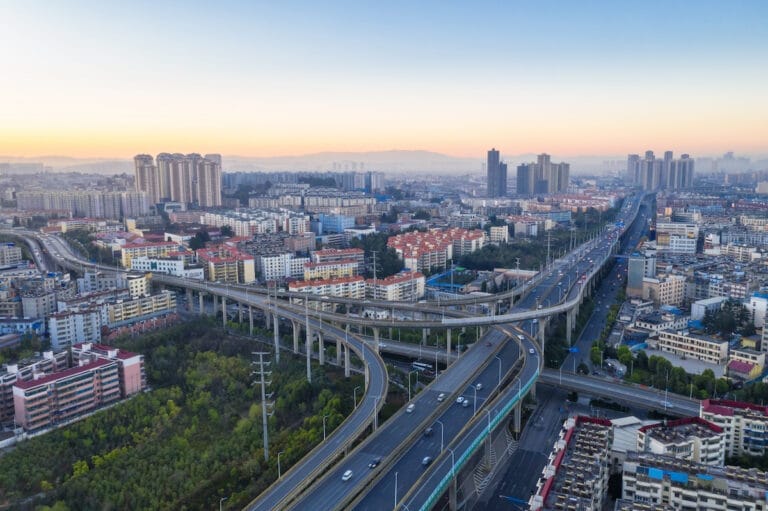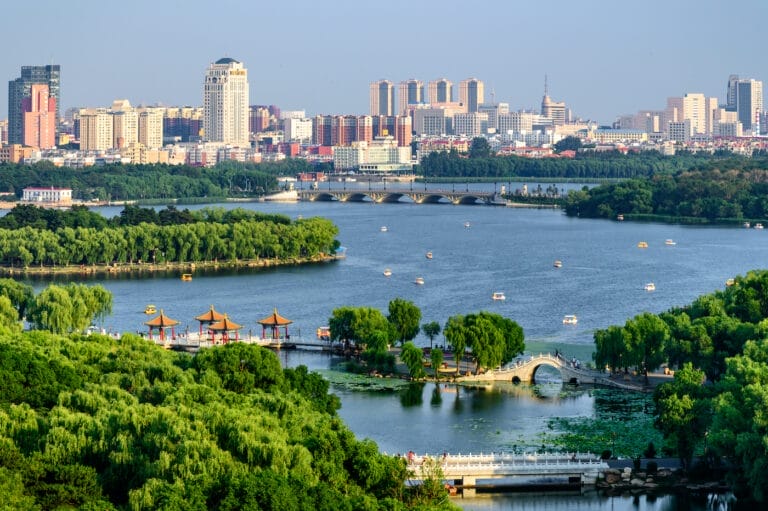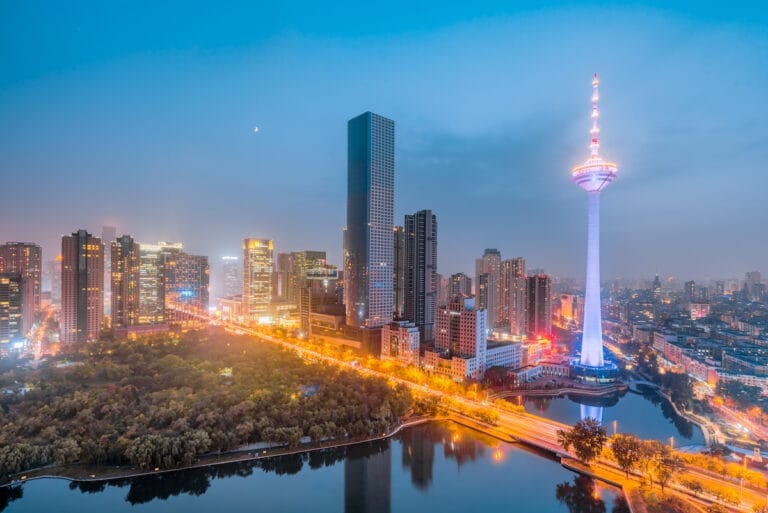
Editor’s note: Changchun is the capital of Jilin Province in northeast China. Historically, the city is well-known as the center of China’s automotive industry. In the 1930s and 40s, Changchun was the head of Manchuria, a Japanese puppet state. Today, the city (like the rest of China) struggles with a declining economy.
But Changchun pastors say churches in their city are bucking the trend. Changchun churches are thriving, growing, and vibrant, and people from across China are moving to Changchun to join these Christian communities.
China Partnership: What changes has Chanchun experienced in the past five years? What changes has your church gone through?
The Church in Changchun Is Different
Pastor Zhu Jiale: For the city as a whole, there has been a large outflow of young people. Many university graduates are unwilling or unable to stay in the northeast. Within the church, the situation is different. In many ways we are going against the flow – the church can still attract young people to remain here. What we see does not completely mirror society.
It is God’s special gift that some brothers have managed to stay for many years. For example, several brothers here today are not originally from the northeast – yet they chose not to go to the more developed south. This is distinctive in the church. We also see some people going against the tide and moving here: they come for school, to find a Reformed church, or so their children can attend Christian schools.
Although the birth rate in society at large is dropping, in the churches, the next generation has more and more children. Many families have two or three or even four children. This is very different from the wider culture, where people are afraid to marry or have children. In the Christian school, every year, our first-grade class is larger than the year before. Churches contribute to society in this way by bearing and raising children.
On the other hand, economically, the pressure is like the rest of the country. Many believers have lost jobs, and businesses are struggling or closing. It’s common to see people operating at a loss.
As for the church, during and after Covid people paid greater attention to family life and discipleship. Within the church, there is a stronger sense of community.
We don’t believe the church is developed only in formal worship services. Instead, we try to make relationships vibrant outside of Sunday. We try to have diverse activities, so the life of the church is more dynamic. We have many young families and many children.
Although the environment is getting tougher, educational ministries [particularly autism support] have grown in a particularly striking way.
Never miss a story
By God’s grace, the churches are “swimming against the current.” This isn’t because we are capable – it’s because God has shown special mercy to this region. Churches are growing, and new church plants are being started.
Changchun’s “Religious Migrants”
Pastor Gao Yuan: Those of us pastors who come from outside the northeast all have wives from here. This is why we stayed – our wives and children are all northeasterners. We’ve assimilated well. People here are not xenophobic.
Over the past few years, the economy here has gotten worse. Many shopping malls and businesses have closed. Changchun and Jilin Province have tried hard to promote “cultural tourism,” but the publicity hasn’t been able to hide the decline. We see many large, expensive, man-made attractions with almost no visitors.
But the church is moving in the opposite direction. Churches have grown, partly due to Changchun’s growing population. Our own congregation has continued to grow slowly. Our church has several “religious migrants”– people who moved here specifically because of Christian education or church life. Some come to study; others come because their children are on the autism spectrum and they want to enroll in our autism educational program. Educational ministries have been a great blessing to our church and presbytery, and have given us connections all over China. Otherwise, few people would be willing to move to the cold, seemingly closed-off northeast.
Our church has already multiplied into two congregations, but both are full again, so we are getting ready to plant a third church. At the same time, we face a shortage of workers. We need more trained teachers, more well-equipped co-workers. Sometimes we feel overwhelmed.
This is a “happy problem,” because it comes from how quickly ministries are expanding, numbers are growing, and the church is flourishing – but it puts a lot of pressure on our workers. We hope more people will be raised up.
Growing Ministries
Elder Huang Yuguo: Our special education ministry has grown a lot in recent years, both in scale and quality. Now we can “export” what we’ve learned, and our work has impacted many families with autistic children in the broader community.
At the same time, we are contacting more and more people struggling with depression, both through our center and in the church. This is a widespread phenomenon across China, as education becomes more and more competitive. Our city has the same problem: many teenagers have depression, often linked to public education. We have people studying and preparing to offer more professional help for this in the future.
Over the last few years, we’ve also developed a mature marriage ministry. One elder leads counseling for premarital, dating, and post-marriage. In our presbytery, we have a lot of practical experience walking with couples through marriage issues.
Pastor Wu Li: Like other pastors, I also feel Changchun is particularly blessed. Within our presbytery, relationships between churches are harmonious and warm, and we are moving forward together.
Our own church started out as a campus fellowship, and experienced the campus revival happening across the nation from 2005 to 2015. During those years, we had many students. But after 2015, campus ministry become harder. Numbers dropped, and it was harder to find student leaders. Campus ministries faced more persecution and tighter control. We used to have many missionaries, partnering with us in evangelism and discipleship. Later, they had to leave because of the environment, and we lost a lot of help.
During Covid, campus work was almost at a standstill. For two or three years, we were basically unable to meet in person. After the pandemic, we started rebuilding. The environment is still tense, and schools exert strong control, but amidst this we see many blessings. Campus ministry is active again. We are trying new, creative ways to connect with young people, share the gospel, and disciple second- and third-generation believers. Although the situation looks bleak, within the church we clearly see God’s blessings on campus ministry.
We are also seeing passionate students rise up. Some want to go into missions, some want to become pastors, some want to stay in Changchun and work in the church. We are very thankful. Things look difficult from the outside – but within the church, we see God’s favor.
Before Covid, our congregation was almost entirely students. Since, our adult ministry has grown a lot. All of a sudden, we have many young couples who remained in Changchun, started families, and have become the main body of our adult congregation. Now, there are more adults than students. Before, we had just one student congregation – now, we have one student congregation and two adult congregations.
Pray for More Laborers
Pastor Du Longkai: We are almost the opposite of this. Our congregation was originally elderly believers, but a few years ago we started a campus fellowship at a nearby school with one or two students. Now, about ten students regularly worship with us. One has even decided that, after graduation, he wants to serve full-time. We also have more young families. In the past few years, our Sunday attendance has doubled. We’re grateful for that.
Most of our young families came to faith through recent conversions or one believing spouse. So, this year we started youth groups, so children in those families can receive biblical, faith-related teaching on Sundays.
We are also thankful that, a few years ago, we came in contact with a small countryside church a few hours away. Their previous leaders had left, and there was no one to shepherd them. Now, we go there every month or two to serve. Our biggest prayer request is that God would raise up more workers, because the needs are great.
Elder Hu Wei: The biggest change is that now our congregation has both a pastor and elders, and we have split into two meeting points. Our challenges are similar to the city overall: economic pressure. Many young people struggle to find work. Some have been laid off, others can’t find a job. Many have unstable work lives.
As for elderly believers, because of the one-child policy of previous decades, many seniors don’t have children who can care for them.
Zhu Jiale, Gao Yuan, Wu Li, Huang Yuguo, Du Longkai, and Hu Wei are pseudonyms for house church pastors and elders in Changchun.
Pray for Changchun churches to continue growing in gratitude and thankfulness to God for his blessings to them and their city.