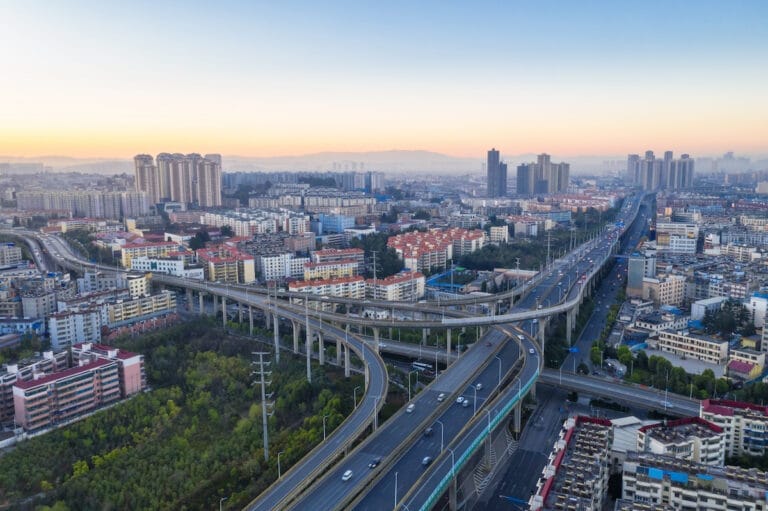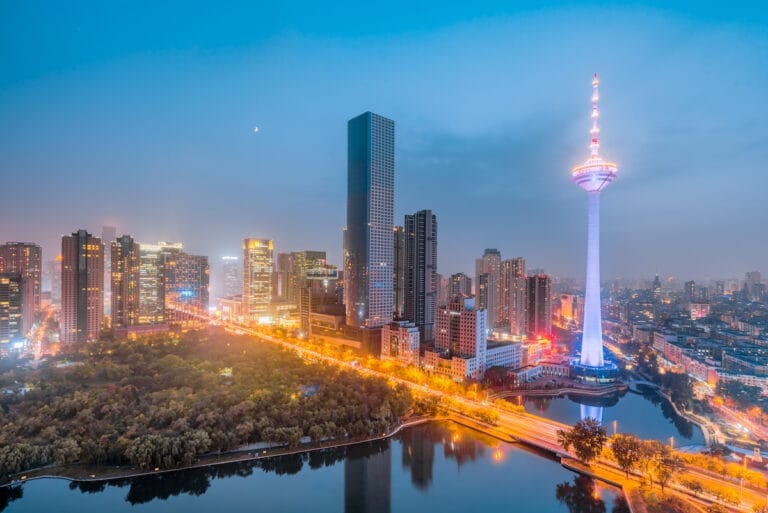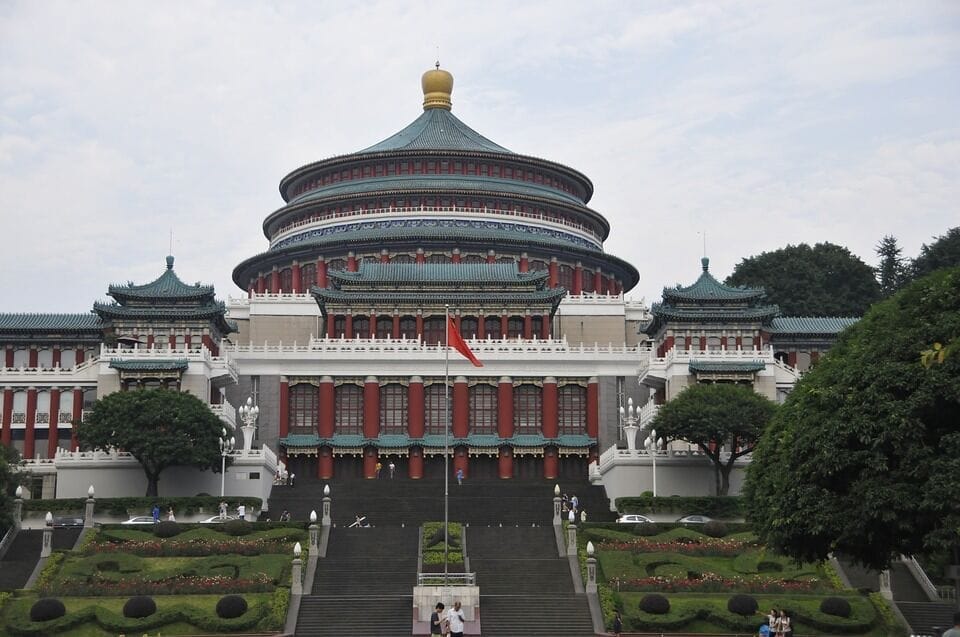
Editor’s note: The city of Changchun is the capital of Jilin Province in China’s northeast. Its name means “long spring” in Chinese, though many people call it “The Detroit of the East” because it is a center of automobile and train manufacturing. During the Japanese occupation of the 1930’s and 40’s, it was the capital of Manchuria. Today, it remains a leading city in the northeastern region.
China Partnership: Can you introduce yourself?
Meet Local Leaders
Pastor Zhu Jiale: I’ve been in full-time ministry for nearly 20 years, and mainly serve families.
Pastor Gao Yuan: I’ve been in full-time ministry almost a decade. Before that, I served bi-vocationally for a long time. Our church has many families, and also some students. Our church also runs a Christian school, so we do a lot in education.
Pastor Wu Li: I’ve been in full-time ministry about 20 years. Our church began as a campus fellowship, but now focus on both students and adults. We are also involved in missions, and raising up students to be potential missionaries. Some of them are already serving on the mission field.
Elder Huang Yugao: I serve in the same church as Pastor Zhang Yong. I’m a church elder, and mainly oversee an autism-rehabilitation and education ministry.
Pastor Du Longkai: I’m a full-time pastor at a church which is mostly made up of elderly believers. I’ve been married more than a decade, and we have two children.
Elder Hu Wei: I’ve been serving full-time more than 10 years, when our church was planted out of Pastor Guo’s church.
Warm-Hearted and Humorous
CP: What is unique about Changchun?
Pastor Zhu Jiale: Changchun has a distinctive foundation as China’s earliest automobile manufacturing base. Seventy years ago, China’s first automobile factory was established here. Sometimes, people call Changchun the “Detroit of the East.”
Never miss a story
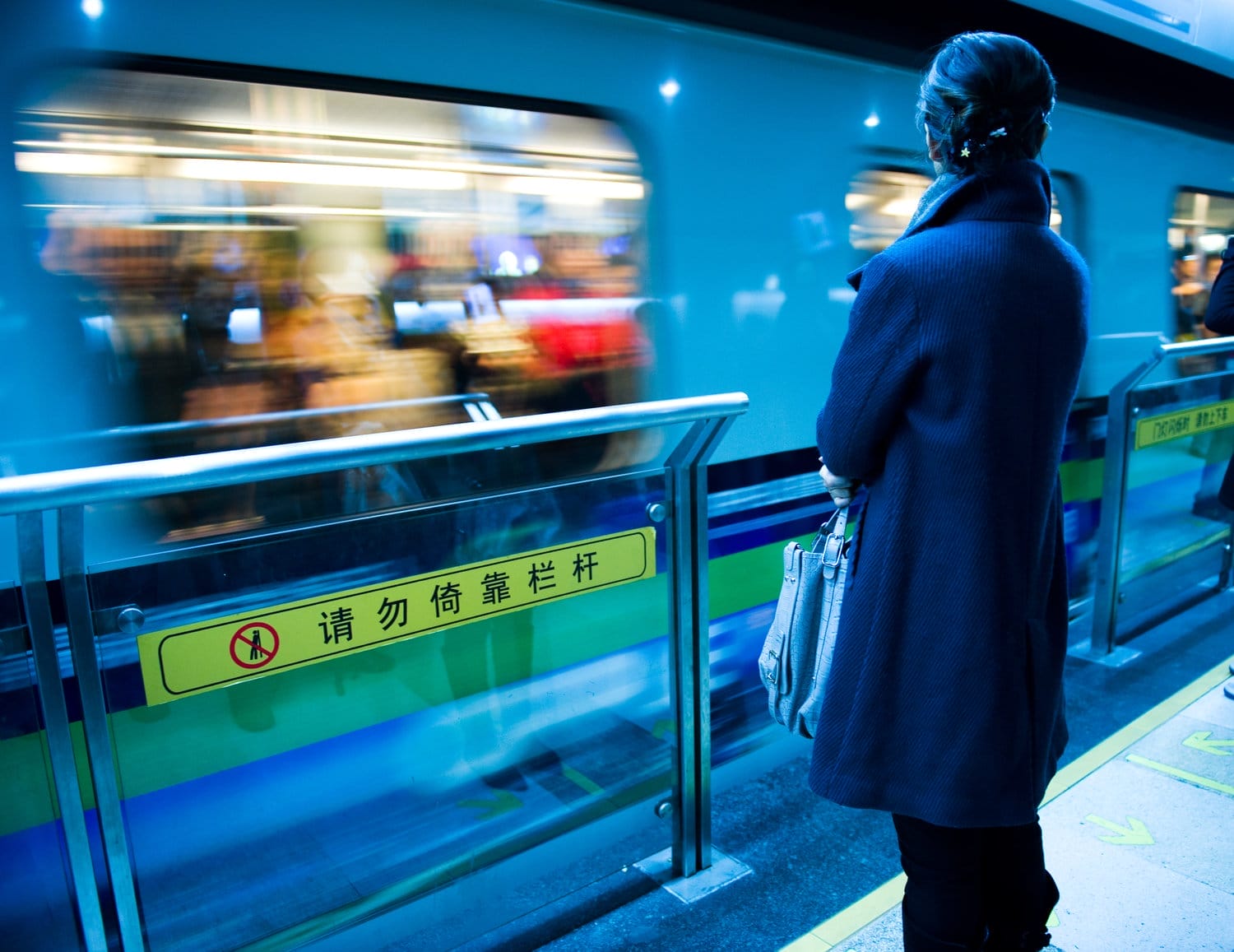
Changchun also began producing trains very early on: regular trains, subway trains, and high-speed rail cars. Industrially, Changchun has a long, unique history.
Changchun has a special national research institute with several thousand staff that focuses on optical engineering. They design and manufacture components for satellites and other advanced equipment.
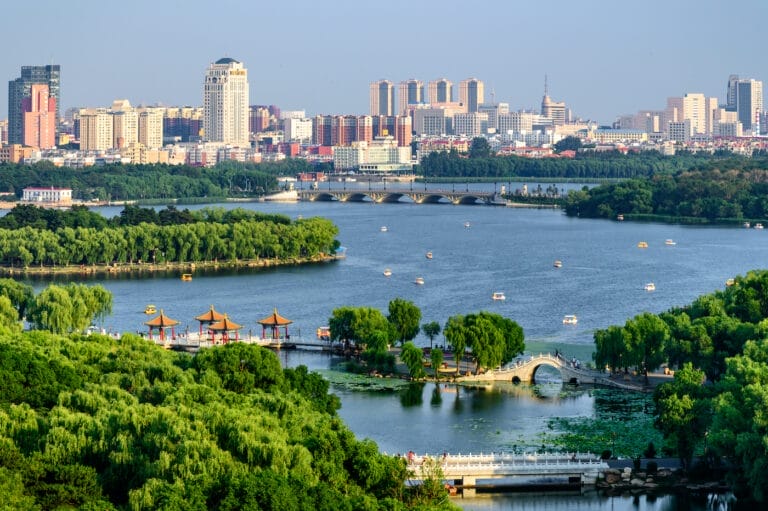
Changchun is also very green. It is one of China’s four officially recognized “garden cities.” There are many parks, and a lot of the city is covered with woods.
Changchun has a distinctive foundation as China’s earliest automobile manufacturing base. Seventy years ago, China’s first automobile factory was established here.
Culturally, Changchun was one of the earliest film centers. The country’s first major film studio was established here, and over the years Changchun has both produced films and dubbed foreign films. Once, Changchun was the most important city in Chinese cinema.
There are many universities here, including Jilin University. That school has the largest student body in China, with about 80,000 students across seven campuses.
Another important aspect is that Changchun has been deeply influenced by Japan. The region was occupied by Japan from 1931 to 1945. The puppet state of Manchuria was established in 1932, and Changchun was its capital. At that time, the Japanese wanted to build a city here even more advanced than Tokyo. Changchun was called “Xinjing” in those years – the “New Capital.” That period left a major mark on Changchun. Many of Manchurian-era buildings are still standing today, visible reminders of that time.
Compared to southern China, life moves at a slower pace in the northeast. People here value relationships, and there is a lot of human warmth. People prioritize emotions, and are very straightforward. Northeastern people usually have a strong sense of humor, and there’s often a lot of laughter. Overall, you could say the three provinces in northeastern China – Heilongjiang, Liaoning, and Jilin – are cheerful, humorous, relational, and warm-hearted. The cultures of these provinces are pretty similar.
Changchun’s Gospel History
As for gospel history, the earliest Christian work in Changchun was Presbyterian. Three major denominations came to northeast China in the 1860s: the Irish Presbyterian church, the Scottish Presbyterian church, and the Danish Lutherans. About 95 percent of ministry was done by the Presbyterians. A hundred years ago, there were more than 20,000 Christians in Northeast China, and about 19,000 were in Presbyterian churches.
People here value relationships, and there is a lot of human warmth. People prioritize emotions, and are very straightforward. Northeastern people usually have a strong sense of humor, and there’s often a lot of laughter.
Churches in Changchun began to be founded around 1886, when the Irish Presbyterians sent missionaries here. They established a church, a maternity hospital, and a kindergarten and primary school. These ministries were running as early as the late Qing dynasty.
I the late 1970s and the 1980s, the gospel “re-entered” northern China. Then, evangelism spread mainly in rural areas. This was done by indigenous Chinese groups like the “Jesus Family” and the “Little Flock.” From the 1990s onward, many overseas denominations arrived, often through foreigners who came as English teachers or university instructors.
Our own churches came out of a traditional house church. Almost 20 years ago we came in contact with Reformed theology, and since then have gradually become a confessional, Reformed Presbyterian church. Before that, we were non-denominational – a fundamentalist house church.
Fewer Marriages, More Divorces
Pastor Gao Yuan: Changchun has long been considered relatively tolerant and warm, a city that is very accepting of others. Maybe because of this, although religious persecution definitely exists here, it seems like it is lighter than in other places.
Pastor Du Longkai: Within Jilin Province, Changchun is relatively central. It’s very convenient to travel to Changchun from other places, and it’s easy to use high-speed rail to go out from Changchun.
Elder Huang Yuguo: I’ll add one thing: recent statistics in the three northeastern provinces show striking patterns in marriage and divorce rates, death rates, and birth rates. Jilin Province has the highest divorce rate in China, over 70 percent! This means that, for every 100 couples who get married during a certain time period, about 70 couples get divorced in the same time period. This doesn’t equate directly to a lifetime divorce rate, but the ratio is still alarming. The birth and death rates here are among the lowest in the nation. To put it simply: of all regions in China, we have fewer marriages, more divorces, fewer births, and more deaths.
Another big issue is that young people are leaving the northeast at a high rate – especially those from Jilin Province, and particularly those from Changchun.
Jilin Province has the highest divorce rate in China, over 70 percent!… Of all regions in China, we have fewer marriages, more divorces, fewer births, and more deaths.
Pastor Zhu Jiale: In China we have a term called “urban primacy.” This refers to the degree to which a provincial capital dominates its province in terms of GDP, population, and resource concentration. Changchun is second in the nation in urban primacy.
This means roughly half of the population of Jilin Province lives in Changchun, and more than half of Jilin’s GDP comes from here. More than half the province’s resources and productive capacity are concentrated in Changchun. In Jilin, Changchun is irreplaceable.
By contrast, a province like Jiangsu has five or six major cities – people can’t even remember that Nanjing is the capital of Jiangsu, because other cities seem more important. But in our province, the second-largest city is maybe three to five times smaller than Changchun when it comes to key metrics. Because of this, young people from all over Jilin Province gather here. But even though the youth of the province are concentrated here, the city itself cannot fully retain them. Many end up migrating still further south.
We also see the consequence of this in rural churches. As the younger population moves to the cities, the average age of rural congregations gets older and older. This is a very concrete challenge.
Zhu Jiale, Gao Yuan, Wu Li, Huang Yuguo, Du Longkai, and Hu Wei are pseudonyms for house church pastors and elders in Changchun.
Pray for Changchun Christians to build strong and loving marriages.