Huizhou: A Mix of Cultures

Editor’s note: This November we are praying for Huizhou, a city of about 6 million in Guangdong Province. 


CP: What makes Huizhou unique among Chinese cities?

Huang Jianli: I’ve lived in Huizhou about five years, and I’ve noticed that Hakka culture is pretty strong here.[1]  When I share the gospel with people in Huizhou, the biggest obstacles is the family or the clan. That’s where people face the most resistance. When people are about to receive Jesus as their Savior, there is an unspoken sense that they can no longer honor their parents the Hakka way – for example, after parents die, there are certain traditional memorial rites and tomb-sweeping. That kind of filial piety is highly valued.

Local Huizhou people in our church are pretty clan-oriented, and often have clan meals and get-together. That way of life is always there, and it can challenge their faith. For instance, it will affect small group meetings, because they won’t go to that if they have something with their family.

Brother Qu: I’m not from here, but have lived and worked here more than 20 years, so I know the city fairly well. I came to Guangdong for work, and chose to live in Huizhou because of the city’s culture. Huizhou’s city slogan is: “Local or newcomers, once you come to Huizhou, we’re all one family.” So, this is a city that attracts outsiders to settle down.

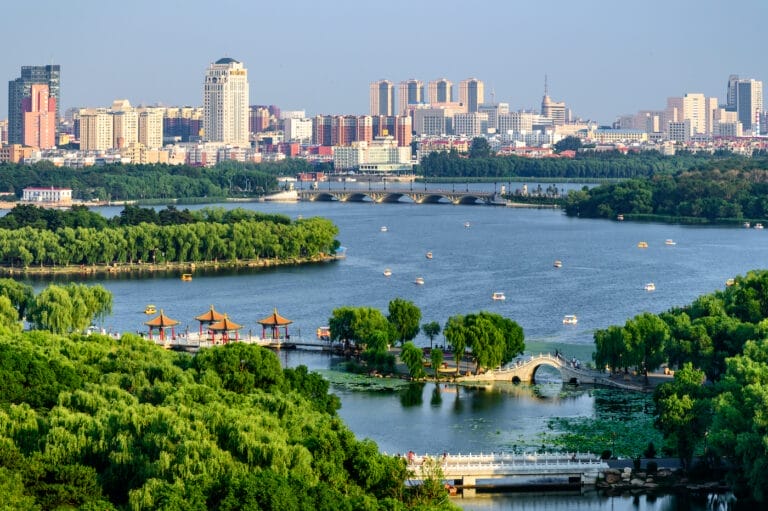
Huizhou has a nice, relaxed pace of life. When they ranked China’s most livable cities, it was in the top five. The natural setting is great, too, with mountains, seas, lakes, and rivers. A lot of people come to Huizhou to enjoy life. Huizhou doesn’t have much heavy industry, and the people who come here to work are mostly white-collar, in the electronics industry.

When you share the gospel, it’s relatively easy to build relationships with people. But, because there isn’t that kind of community network, it’s hard to build deep relationships. People are mostly casual acquaintances, people you nod to or play ball with. The relationships are all shallow, and it’s hard to build deeper trust and friendship.

Huizhou’s geographic location sits between Shenzhen and Meizhou. The city’s culture alsos sits between the two cities: Meizhou is the heart of Hakka culture, while Shenzhen is a city built by outsiders. Huizhou has some Hakka culture, but is not a big metropolis like Shenzhen.

CP: You’ve both mentioned Hakka culture. Could you explain a bit more for us – what is Hakka culture like?

Brother Qu: Well, I actually live in Meizhou now, which is called the “Hakka Capital.” “Hakka” roughly means people who moved down from the Central Plains [the lower Yellow River region, centered in Henan] and, after many years of migration, ended up here. Hakka people are basically outsiders who settled here. When a group from elsewhere settles in a new place, they develop certain characteristics: they stick together; they are hardworking, industrious, and brave; and they are very capable in getting things done.


Never miss a story

Sign up to receive our weekly email with our original articles.

My first impression of Hakka culture was that the women are particularly capable. Back when I moved here, I couldn’t believe it when I would see women carrying their children while still working in the fields. But the Hakka women – at least those from a few decades ago, I’m not sure about the current generation! – anyway, middle-aged Hakka women are truly hardworking and virtuous.

CP: How long ago did this migration take place?
Brother Qu: I think the migrations happened over more than a thousand years. From what I’ve read, there were about seven different migrations, with the earliest probably beginning a few hundred years after Christ. This all went on for a long time.

Another thing you’ll notice about Hakka people is that they are hardworking. There are a lot of Hakka people throughout Southeast Asia now. Back when China was going through hard times, through famine and war, these people migrated to Southeast Asia. Many people from Guangdong went to Southeast Asia, and the Hakka were the majority of those people.

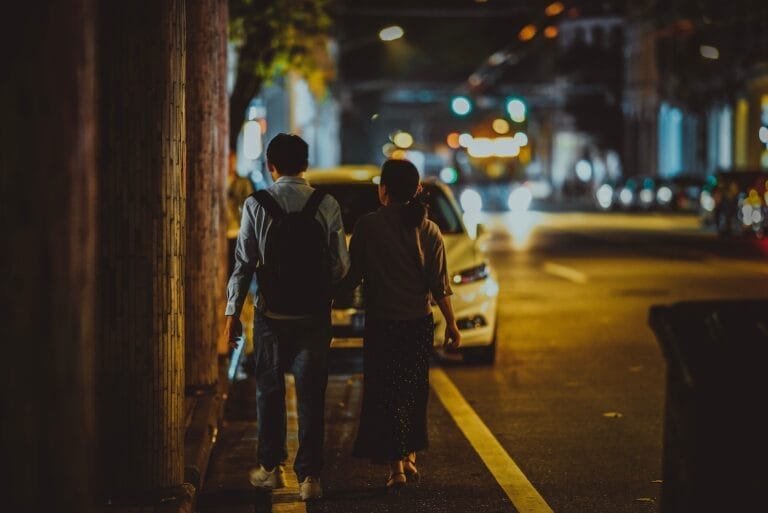
Yang Guang: I only came to this area a few years ago, so it’s still very unfamiliar. People come to Huizhou to work. During the day you don’t see anyone, but at night the place is lit up like a night market, and there are tons of people. Everyone comes home from work and gathers to eat and drink, and it goes all night long. There’s tea culture, drinking culture, and lots of mahjong, too. Square dancing is the most common exercise, and older men and women are out there all night. The nightlife is really lively.

The state keeps a very tight grip on things like education, and all the education is very atheistic. There’s a lot of “Red culture.” [2]

Brother James: Compared to other cities I’ve seen, the people in Huizhou are relatively well-educated and cultured. Huizhou has a large population of people who came here from elsewhere, so there’s a lot of blending among different groups: Cantonese people, plus Chaoshan and Hakka. Now, because of migrant workers, there are lots of people from other places here, and they are integrated with one another. I think that is a real grace in Huizhou.

CP: What is special about Huizhou’s gospel history?

Huang Jianli: There are some hospitals here that were once founded by missionaries. But I don’t know much about that yet.

Brother Qu: It doesn’t seem like there is anything very well-known about Huizhou’s gospel history. If there were, people would know about it, but it seems like it simply didn’t have a very big influence.

Yang Guang: I’ve noticed that Huizhou has a lot of church buildings. Almost every town and district in Huizhou has one. This shows that, on the surface, there are lots of churches and lots of believers. But the foundation of their faith – well, that’s different.

In China, church buildings are under government control. There are many churches like that, and the people in those churches are mostly older. There are very few young people in the Three-Self churches, while the house churches have quite a bit more young people.

Brother James: We did a bit of research and studied Huizhou’s history, and found that German Lutherans came to Huizhou very early. There was already mission work here by 1903. Later the Adventists came to Huizhou, and they built a hospital in 1909, the city’s first hospital and the predecessor of today’s Third People’s Hospital. In 1918, the Baptists also came to Huizhou.

Eventually these churches merged, and by 1950, all those churches were folded into the Three-Self system. Today, if you look at Huizhou, you can’t really find any concrete trace of this mission history.

[1] The Hakka (客家, literally “guest families”) are a Han Chinese subgroup descended from migrants out of northern China. They are concentrated in Guangdong, Fujian, and Jiangxi, and are known for their own dialect, strong clan ties, and ancestral rites.

[2] “Red culture” refers to state-promoted Communist revolutionary heritage and ideology, such as patriotic education, Party history, and revolutionary memorial sites.


Huang Jianli, Brother Qu, Yang Guang, Sister Yan, Brother James, and Fan Zhuhui are pseudonyms for house church leaders in Huizhou.

Pray for Huizhou to become a city of people who wholeheartedly follow Jesus.

Share This Story

Further Reading

Huizhou
Huizhou: A Mix of Cultures
Read More
Huizhou
Huizhou: A Single Palm Can't Clap
Read More
Japan China
Chinese on Mission: Hope for Japan
Read More

Will you pray for Chinese Christians

Chinese Christians are asking us for prayer. Will you join  our prayer team? Sign up to receive our weekly prayer guide.

LEADERSHIP DEVELOPMENT IN CHINA

With rising pressure and persecution in China, there are two challenges imperative for church leaders. The first challenge is for current leaders to love Christ above all else, and not to stray into legalism or love of the world. The second challenge is to raise up the next generation of leaders, who will humbly model Jesus even if current leaders are arrested.

WILL YOU JOIN US IN PRAYING FOR LEADERSHIP DEVELOPMENT IN CHINA? PRAY FOR:

  1. Current leaders to grow in their daily walks with Christ
  2. Current leaders to shepherd and raise up new leaders
  3. New leaders who love Christ and will model him to the world
  4. New leaders to love and care for the church

Videos

ABOUT LEADERSHIP DEVELOPMENT

About Shenyang

Shenyang is a city located in northeastern China and is the capital of Liaoning Province. It is known for its rich history and cultural heritage, including the Shenyang Imperial Palace, which is a UNESCO World Heritage site. Shenyang is also a hub for China’s heavy industry, with companies such as the China First Automobile Group and the Shenyang Aircraft Corporation having their headquarters in the city.

Videos

Stories from Shenyang

About Qingdao

Qingdao is a city located in eastern China and is famous for its beaches, beer, and seafood. The city is home to several landmarks, including the Zhanqiao Pier and the Badaguan Scenic Area. Qingdao is also a major port and has a thriving economy, with industries such as electronics, petrochemicals, and machinery.

Videos

Stories from Qingdao

About Xiamen

Xiamen is a city located in southeastern China and is a popular tourist destination known for its beautiful coastal scenery, including Gulangyu Island, which is a UNESCO World Heritage site. The city is also a hub for China’s high-tech industry, with companies such as Huawei and ZTE having research and development centers in Xiamen.

Videos

Stories from Xiamen

About Chongqing

Chongqing is a city located in southwestern China and is a major economic center in the region. The city is known for its spicy cuisine, especially its hot pot dishes, and is also famous for the Three Gorges Dam, the world’s largest hydroelectric dam. Chongqing is also home to several historic sites, including the Dazu Rock Carvings, which are UNESCO World Heritage sites.

Videos

Stories from Chongqing

About Nanjing

Nanjing is a city located in eastern China and is the capital of Jiangsu Province. It is one of China’s ancient capitals and has a rich cultural history, including the Ming Xiaoling Mausoleum, the Nanjing City Wall, and the Confucius Temple. Nanjing is also a modern city with a thriving economy and is home to several universities, including Nanjing University and Southeast University.

Videos

Stories from Nanjing

About Changchun

Changchun is a city located in northeastern China and is the capital of Jilin Province. It is known for its rich cultural heritage and is home to several historical landmarks such as the Puppet Emperor’s Palace and the Jingyuetan National Forest Park. Changchun is also a hub for China’s automotive industry, with several major automobile manufacturers having their headquarters in the city.

Videos

Stories from Changchun

About Guangzhou

Guangzhou, also known as Canton, is a city located in southern China and is the capital of Guangdong Province. It is one of the country’s largest and most prosperous cities, serving as a major transportation and trading hub for the region. Guangzhou is renowned for its modern architecture, including the Canton Tower and the Guangzhou Opera House, as well as its Cantonese cuisine, which is famous for its variety and bold flavors. The city also has a rich history, with landmarks such as the Chen Clan Ancestral Hall, the Sun Yat-sen Memorial Hall, and the Temple of the Six Banyan Trees. Additionally, Guangzhou hosts the annual Canton Fair, the largest trade fair in China.

Videos

Stories from Guangzhou

About Kunming

Kunming is a city located in southwest China and is the capital of Yunnan Province. Known as the “City of Eternal Spring” for its mild climate, Kunming is a popular tourist destination due to its natural beauty and cultural diversity. The city is home to several scenic spots, including the UNESCO World Heritage Site of the Stone Forest, Dian Lake, and the Western Hills. Kunming is also famous for its unique cuisine, which features a mix of Han, Yi, and Bai ethnic flavors. The city has a rich cultural history, with ancient temples and shrines like the Yuantong Temple and the Golden Temple, and it’s also a hub for Yunnan’s ethnic minority cultures, such as the Yi and Bai peoples.

Videos

Stories from Kunming

About Shenzhen

Shenzhen is a city located in southeastern China and is one of the country’s fastest-growing metropolises. The city is renowned for its thriving tech industry, with companies such as Huawei, Tencent, and DJI having their headquarters in Shenzhen. The city also has a vibrant cultural scene, with numerous museums, art galleries, and parks. Shenzhen is also known for its modern architecture, such as the Ping An Finance Center and the Shenzhen Bay Sports Center. Despite its modernization, Shenzhen also has a rich history and cultural heritage, with landmarks such as the Dapeng Fortress and the Chiwan Tin Hau Temple.

Videos

Stories from Shenzhen

About Chengdu

Chengdu is a city located in the southwestern region of China, and the capital of Sichuan province. It has a population of over 18 million people, and it is famous for its spicy Sichuan cuisine, laid-back lifestyle, and its cute and cuddly residents – the giant pandas. Chengdu is home to the Chengdu Research Base of Giant Panda Breeding, where visitors can observe these adorable creatures in their natural habitat. The city also boasts a rich cultural heritage, with numerous temples, museums, and historical sites scattered throughout its boundaries. Chengdu is a city of contrasts, with ancient traditions coexisting alongside modern developments, making it an intriguing and fascinating destination for visitors to China. 

Videos

Stories from Chengdu

About Beijing

Beijing is the capital city of China and one of the most populous cities in the world, with a population of over 21 million people. The city has a rich history that spans over 3,000 years, and it has served as the capital of various dynasties throughout China’s history. Beijing is home to some of the most iconic landmarks in China, including the Great Wall, the Forbidden City, and the Temple of Heaven. The city is also a hub for political, cultural, and educational activities, with numerous universities and research institutions located within its boundaries. Beijing is renowned for its traditional architecture, rich cuisine, and vibrant cultural scene, making it a must-visit destination for travelers to China.

Videos

Stories from Beijing

About Shanghai

Shanghai is a vibrant and dynamic city located on the eastern coast of China. It is the largest city in China and one of the most populous cities in the world, with a population of over 24 million people. Shanghai is a global financial hub and a major center for international trade, with a rich history and culture that spans over 1,000 years. The city is famous for its iconic skyline, which features towering skyscrapers such as the Oriental Pearl Tower and the Shanghai Tower. Shanghai is also home to a diverse culinary scene, world-class museums and art galleries, and numerous shopping districts. It is a city that is constantly evolving and reinventing itself, making it a fascinating destination for visitors from around the world.

Videos

Stories from Shanghai

give

A short message about partnering with us.