Chinese on Mission: Hope for Japan

Editor’s note: The House Church in China Podcast tells the stories of the modern Chinese house church. In season four, we hear the story of two non-Christian Chinese who turned to Jesus and left their homes to be a part of reaching all nations with the good news. Today, we are proud to publish an excerpt from the last episode of Season 4. Daisy and Mike’s mission is to reach Japan by influencing the next generation. Will this unique strategy work?


Reaching Japan – Through Chinese Children

Daisy and Mike are not like many traditional missionaries. They are moving to Japan to plant a Chinese-speaking congregation for Chinese expats living in the area. They are also not like other immigrant pastors, seeking to minister to only their own people in a foreign land. Their goal is cross-cultural, muti-generational missions that will eventually bring revival to the Japanese church.

Here’s Mike’s take: “The mainstream culture is very strong in Japan. Children will inevitably be influenced by the mainstream culture and can enter society at large. In such settings, our strategy can work.”

Our strategy is to build a healthy church among Chinese and the second generation.

For this strategy to work, they are not planning to just serve on the mission field for five to ten years. They are preparing to be in Japan for generations.

“Our strategy is to build a healthy church among Chinese and the second generation,” said Daisy. “Because of the second generation, our ministry will be bilingual.That’s our mission strategy.”

To do this, they need the help of the next generation.

That’s why, when Mike and Daisy began holding worship services in Chinese last summer, they also started a bilingual kids ministry, so that the Chinese kids can invite their friends and classmates to church. This may be the church’s biggest asset, but perhaps also its biggest challenge. How does a missionary family send their kids into a foreign culture and still make sure they keep their faith?

“Because of the gospel, our first identity is not Chinese; our first identity is Christian. In many Chinese churches in Japan there is a tendency to strengthen Chinese identity and to gather people in order to preserve it. In our church we seek to break that idea. It’s not your primary identity; your primary identity belongs to heaven—you are a Christian,” said Lily.

She continues: “This matters for parenting too. Some parents pressure their children to “remember you are Chinese” and to remember the history and animosity between China and Japan. That creates heavy pressure. But you cannot prevent children from growing up inside Japanese culture, which can lead to confusion if their identity is framed primarily in ethnic or historical terms. We want the gospel to define their identity.”

A Missionary Graveyard

To pass on this gospel identity to their kids will be no small task, particularly in a third-culture setting where multiple languages are involved. Sometimes that could be as practical as teaching their kids to decide when and when not to play baseball, or how to prioritize their church over academic achievements. On one hand, the kids need to fit into the Japanese culture to reach others. On the other hand, they will have to resist some of the most common Japanese practices. Finding the perfect balance will not only affect their kids’ faith, but also the effectiveness of their mission.


Never miss a story

Sign up to receive our weekly email with our original articles.

Because of the gospel, our first identity is not Chinese; our first identity is Christian.


Never miss a story

Sign up to receive our weekly email with our original articles.

Another major question Mike and Daisy face is how to infiltrate and influence the Japanese culture and pass this gospel identity to them. Japan has historically been referred to as “the missionary graveyard.” The people are known for their reserve, and they are willing to suppress individuality for the sake of the collective.

“For the sake of the group, people are willing to sacrifice—freedom, preferences, even emotions,” said Mike. “It’s a shame-oriented culture, very sensitive to others’ eyes and expectations.”

Cultural Identity and Faith

In such a context, religion is not just about individual beliefs, but it is a deep part of the people’s cultural identity. For example, Daisy shared that ancestor worship is an extremely important tradition for the Japanese people. Every family has a shrine to their ancestors. Not that all people believe in the afterlife, but ancestor worship is a strong indication that you are part of the family, both in this life and in the next.

“They may say they are seeking good fortune, but they don’t connect it to religion—it’s ‘culture.’ I think that’s different,” said Daisy. “Even if you call it culture, it’s religious. So we choose to abstain from these activities. Behind the “culture” there is spiritual bondage.

This is why it’s hard to talk about “religion” with Japanese friends. When you frame it as religion, they say, “That’s just culture.””

Japan is very good at receiving global influences selectively… They choose what to accept and politely decline the rest. The politeness can make it hard to realize you’ve been declined.

For an individual to embrace Christ and abandon this ancestor worship, it is akin to abandoning the Japanese identity altogether. Therefore, despite technological progress and decades of economic integration with the West, Japanese culture is still very much closed off to Christianity.

Here’s how Daisy describes that dynamic: “Japan is very good at receiving global influences selectively—appreciating what’s good—while preserving its center. They choose what to accept and politely decline the rest. The politeness can make it hard to realize you’ve been declined.”


Daisy and Mike are pseudonyms for a Chinese Christian couple who are serving God in missions.

Pray for Daisy and Mike to be able to reach the core of Japanese culture with the freedom and joy of the gospel.

Share This Story

Further Reading

Japan China
Chinese on Mission: Hope for Japan
Read More
Qiqihar
Qiqihar: What Makes It Unique?
Read More
Qiqihar
Qiqihar: Worried About the Future
Read More

Will you pray for Chinese Christians

Chinese Christians are asking us for prayer. Will you join  our prayer team? Sign up to receive our weekly prayer guide.

LEADERSHIP DEVELOPMENT IN CHINA

With rising pressure and persecution in China, there are two challenges imperative for church leaders. The first challenge is for current leaders to love Christ above all else, and not to stray into legalism or love of the world. The second challenge is to raise up the next generation of leaders, who will humbly model Jesus even if current leaders are arrested.

WILL YOU JOIN US IN PRAYING FOR LEADERSHIP DEVELOPMENT IN CHINA? PRAY FOR:

  1. Current leaders to grow in their daily walks with Christ
  2. Current leaders to shepherd and raise up new leaders
  3. New leaders who love Christ and will model him to the world
  4. New leaders to love and care for the church

Videos

ABOUT LEADERSHIP DEVELOPMENT

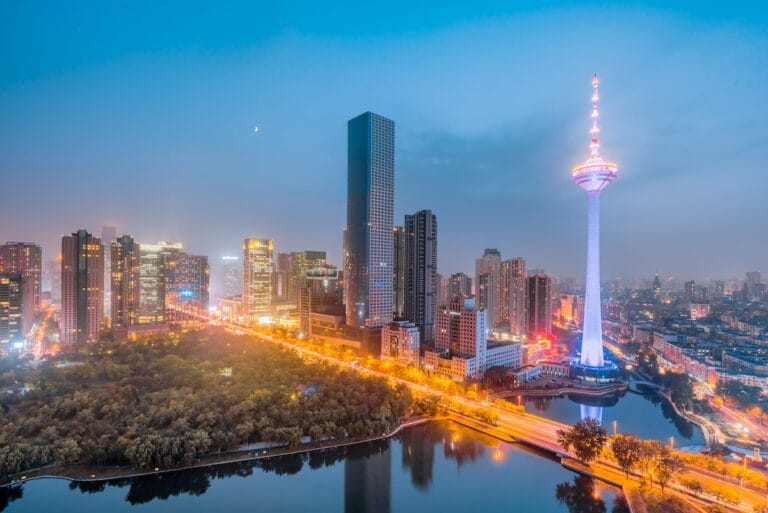
About Shenyang

Shenyang is a city located in northeastern China and is the capital of Liaoning Province. It is known for its rich history and cultural heritage, including the Shenyang Imperial Palace, which is a UNESCO World Heritage site. Shenyang is also a hub for China’s heavy industry, with companies such as the China First Automobile Group and the Shenyang Aircraft Corporation having their headquarters in the city.

Videos

Stories from Shenyang

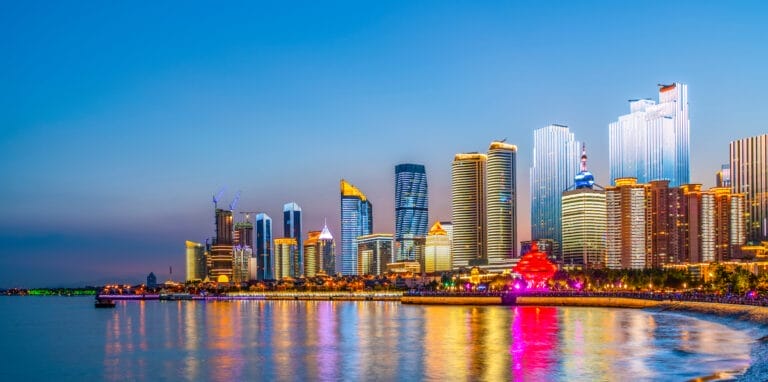
About Qingdao

Qingdao is a city located in eastern China and is famous for its beaches, beer, and seafood. The city is home to several landmarks, including the Zhanqiao Pier and the Badaguan Scenic Area. Qingdao is also a major port and has a thriving economy, with industries such as electronics, petrochemicals, and machinery.

Videos

Stories from Qingdao

About Xiamen

Xiamen is a city located in southeastern China and is a popular tourist destination known for its beautiful coastal scenery, including Gulangyu Island, which is a UNESCO World Heritage site. The city is also a hub for China’s high-tech industry, with companies such as Huawei and ZTE having research and development centers in Xiamen.

Videos

Stories from Xiamen

About Chongqing

Chongqing is a city located in southwestern China and is a major economic center in the region. The city is known for its spicy cuisine, especially its hot pot dishes, and is also famous for the Three Gorges Dam, the world’s largest hydroelectric dam. Chongqing is also home to several historic sites, including the Dazu Rock Carvings, which are UNESCO World Heritage sites.

Videos

Stories from Chongqing

About Nanjing

Nanjing is a city located in eastern China and is the capital of Jiangsu Province. It is one of China’s ancient capitals and has a rich cultural history, including the Ming Xiaoling Mausoleum, the Nanjing City Wall, and the Confucius Temple. Nanjing is also a modern city with a thriving economy and is home to several universities, including Nanjing University and Southeast University.

Videos

Stories from Nanjing

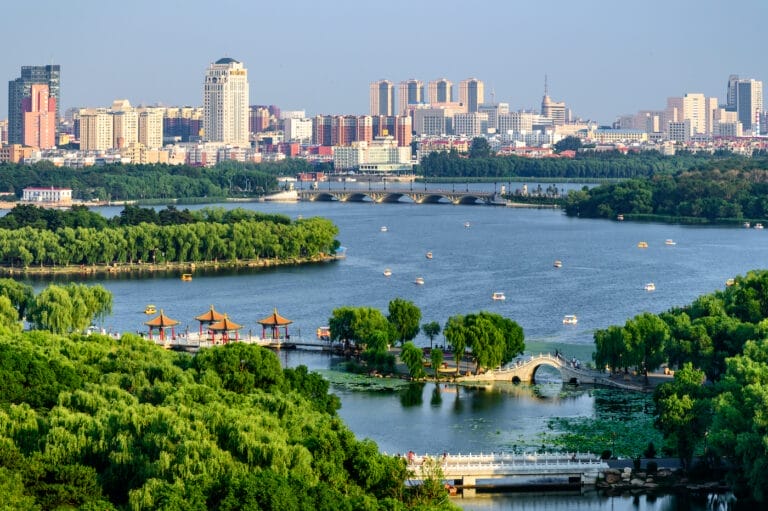
About Changchun

Changchun is a city located in northeastern China and is the capital of Jilin Province. It is known for its rich cultural heritage and is home to several historical landmarks such as the Puppet Emperor’s Palace and the Jingyuetan National Forest Park. Changchun is also a hub for China’s automotive industry, with several major automobile manufacturers having their headquarters in the city.

Videos

Stories from Changchun

About Guangzhou

Guangzhou, also known as Canton, is a city located in southern China and is the capital of Guangdong Province. It is one of the country’s largest and most prosperous cities, serving as a major transportation and trading hub for the region. Guangzhou is renowned for its modern architecture, including the Canton Tower and the Guangzhou Opera House, as well as its Cantonese cuisine, which is famous for its variety and bold flavors. The city also has a rich history, with landmarks such as the Chen Clan Ancestral Hall, the Sun Yat-sen Memorial Hall, and the Temple of the Six Banyan Trees. Additionally, Guangzhou hosts the annual Canton Fair, the largest trade fair in China.

Videos

Stories from Guangzhou

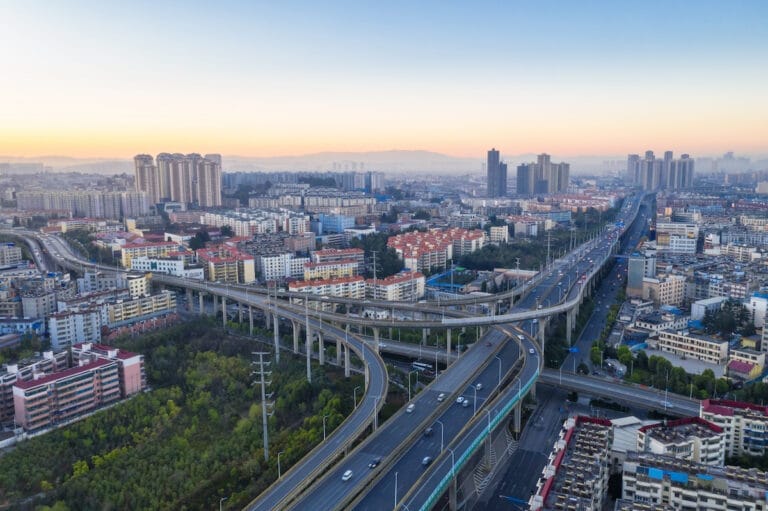
About Kunming

Kunming is a city located in southwest China and is the capital of Yunnan Province. Known as the “City of Eternal Spring” for its mild climate, Kunming is a popular tourist destination due to its natural beauty and cultural diversity. The city is home to several scenic spots, including the UNESCO World Heritage Site of the Stone Forest, Dian Lake, and the Western Hills. Kunming is also famous for its unique cuisine, which features a mix of Han, Yi, and Bai ethnic flavors. The city has a rich cultural history, with ancient temples and shrines like the Yuantong Temple and the Golden Temple, and it’s also a hub for Yunnan’s ethnic minority cultures, such as the Yi and Bai peoples.

Videos

Stories from Kunming

About Shenzhen

Shenzhen is a city located in southeastern China and is one of the country’s fastest-growing metropolises. The city is renowned for its thriving tech industry, with companies such as Huawei, Tencent, and DJI having their headquarters in Shenzhen. The city also has a vibrant cultural scene, with numerous museums, art galleries, and parks. Shenzhen is also known for its modern architecture, such as the Ping An Finance Center and the Shenzhen Bay Sports Center. Despite its modernization, Shenzhen also has a rich history and cultural heritage, with landmarks such as the Dapeng Fortress and the Chiwan Tin Hau Temple.

Videos

Stories from Shenzhen

About Chengdu

Chengdu is a city located in the southwestern region of China, and the capital of Sichuan province. It has a population of over 18 million people, and it is famous for its spicy Sichuan cuisine, laid-back lifestyle, and its cute and cuddly residents – the giant pandas. Chengdu is home to the Chengdu Research Base of Giant Panda Breeding, where visitors can observe these adorable creatures in their natural habitat. The city also boasts a rich cultural heritage, with numerous temples, museums, and historical sites scattered throughout its boundaries. Chengdu is a city of contrasts, with ancient traditions coexisting alongside modern developments, making it an intriguing and fascinating destination for visitors to China. 

Videos

Stories from Chengdu

About Beijing

Beijing is the capital city of China and one of the most populous cities in the world, with a population of over 21 million people. The city has a rich history that spans over 3,000 years, and it has served as the capital of various dynasties throughout China’s history. Beijing is home to some of the most iconic landmarks in China, including the Great Wall, the Forbidden City, and the Temple of Heaven. The city is also a hub for political, cultural, and educational activities, with numerous universities and research institutions located within its boundaries. Beijing is renowned for its traditional architecture, rich cuisine, and vibrant cultural scene, making it a must-visit destination for travelers to China.

Videos

Stories from Beijing

About Shanghai

Shanghai is a vibrant and dynamic city located on the eastern coast of China. It is the largest city in China and one of the most populous cities in the world, with a population of over 24 million people. Shanghai is a global financial hub and a major center for international trade, with a rich history and culture that spans over 1,000 years. The city is famous for its iconic skyline, which features towering skyscrapers such as the Oriental Pearl Tower and the Shanghai Tower. Shanghai is also home to a diverse culinary scene, world-class museums and art galleries, and numerous shopping districts. It is a city that is constantly evolving and reinventing itself, making it a fascinating destination for visitors from around the world.

Videos

Stories from Shanghai

give

A short message about partnering with us.