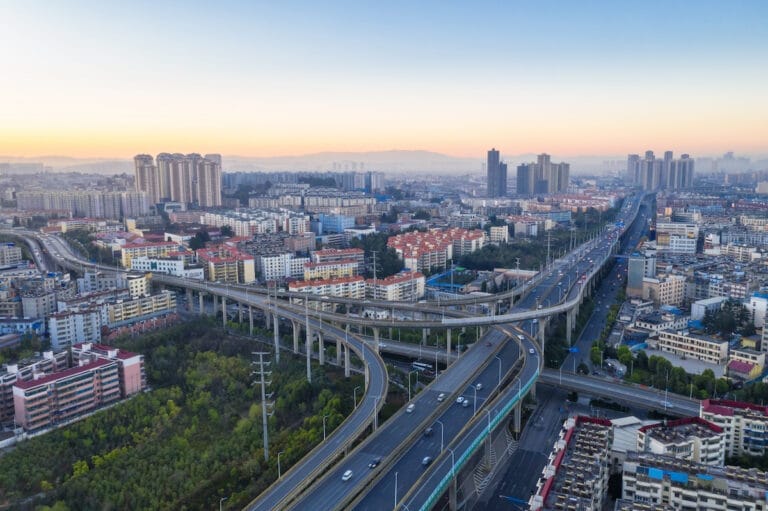
Editor’s note: We are praying for Yantai this September. Yantai is an ancient city that today has a population of about seven million. Local church leaders say the city is aging rapidly, and that although the economy is doing well on paper, in real life it’s very tough for young people to stay and find good jobs. In recent years Yantai churches have built stronger connections among themselves, and the Christian community is doing a better job caring for one another and the needs of the city.
China Partnership: How has Yantai changed in the last five years? How has your church changed?
Economic Uncertainty
Zhang Anwei: A lot has changed, especially after Covid.
There’s infrastructure: the airport was enlarged, expressways are being built, and infrastructure is going up all over Yantai. There are many seaside paths for residents to enjoy. A lot of foreign companies have moved into the economic development zone. But now Hyundai and others are laying off large numbers, and that will make Yantai more and more anxious.
Within Yantai, the counties are still doing well economically, but you feel real anxiety in urban districts. After graduating, young people find it hard to stay. Some of our university students graduated this year, and they found it extremely difficult to get a job – not to mention getting a job that gives weekends off. Most people returned to their hometown or just moved to another big city.
In our church, in the last five years we started a congregation and then planted another one. We moved to an area with comparatively more young people, and are hoping to do more student ministry.
The economy here has been getting worse and worse. For instance: four or five years ago the supermarket by our house had two floors and sold all kinds of things; now it is just one floor and carries fewer and fewer goods.
Over the past five years, our church has gone from being a student fellowship to a church with formal membership. We elected several deacons, and are praying we will keep maturing and growing, and select leaders after God’s own heart. We are also considering a “pre-seminary” course to think about how to train more young people and start cultivating leaders.
Helping Each Other in Ministry
Yu Kangxi: Our city is a smaller city in Yantai, and recently we got high-speed rail. Now we can reach a lot of places very conveniently. That is pretty significant; transportation is so much easier.
A large plant was built in this area, which might add many thousands of jobs. People from other places are steadily moving in. We are also expecting to get another university in our town, which means more young people.
In our church, we’ve lost several families with children over the last few years. Our church isn’t big, so we feel it a lot when people move. Most have had to move to bigger cities because of work.
Never miss a story
Our church moved from being a fellowship to being a church as families started having children. Babies keep arriving, and we are all adjusting. Several brothers in our church, including me, received theological training, which is something we did not have before. A few younger brothers have begun preaching and taking part in pulpit ministry. Our church isn’t large, but it matters that others can share the pulpit.
Over the past five years we started a pastors’ fellowship with other area churches and have built trusting relationships with one another, so we can exchange pulpits and help each another in ministry.
Fewer children, Fewer Births
Sister Xuezhen: Since pandemic restrictions were lifted, the economy here has been getting worse and worse. For instance: four or five years ago the supermarket by our house had two floors and sold all kinds of things; now it is just one floor and carries fewer and fewer goods. My parents said their pensions are not rising as much as before, and people around me say jobs are hard to find, and academic credentials don’t have as much value.
There are fewer children and fewer births these past few years, so kindergartens have started going tuition-free. But there is still fierce educational competition, and school children experience enormous pressure.
On the street, it feels genuinely hard to spot a young person. There are fewer people in Yantai, and the people who are here are older.
A good thing is that a lot of new recreational facilities have gone up around Yantai – there’s a big amusement complex in the area, and it’s all free. Apartment complexes have also built leisure facilities, which is a good thing.
There have been many changes in the church. Compared to before, it seems like now numbers are more fluid, more up and down. Some people moved and started coming to our church; others left the church; a few people just come occasionally.
Many leaders and churches all over Yantai have come out of traditional churches. Others, like my husband and me, are inside traditional house churches, but are learning about Reformed faith and are leading our churches in that direction.
Wages Don’t Match Living Costs
Sister Wen: There are fewer people in Yantai, and they are older. The permanent population dropped, and the birth rate is very low, not even half of what it was seven years ago.
There are about seven million people in Yantai, and 30 percent are elderly. This means that, out of every three or four adults, one is over 60. The other day I happened to look at something about aging cities in China, and Yantai ranked first.
Judging by the projections about social change, this aging will keep going. It will not stop. I can feel it walking around the city. The air, food, and environment here are very comfortable, so more and more older people from other places buy homes here. On the street, it feels genuinely hard to spot a young person. There are fewer people in Yantai, and the people who are here are older. I am starting to be quite worried about this, because the church is being affected, too, and is aging as well.
Another obvious change is economic difficulty, which is reflected in the church’s giving. When you look at GDP figures, they say Yantai’s GDP has hit some new height. Yet everyone around me says the same thing: this one is laid off; that one is taking a pay cut. You hear how hard it is for brothers and sisters, and in the church’s income you see very clearly that some people have stopped giving. But prices here keep climbing. People who came from Taiwan years ago ask, “Why are prices in Yantai as high as in Taiwan?” Yet wages are very low, they do not match at all.
Our church has begun to connect much more with other churches in the city. It no longer shuts the door and pastors only itself. We have begun to pay more attention to the city where we live, and to see the gospel needs of people here.
When jobs are hard to find, the cost of living is high, and income is low, a natural thing happens: more people flow out than flow in. Talented people are going out.
As for our church, because of the wider environment and the situation of Chinese society, we have broken the whole congregation into parts. [She is referring to the common practice of Chinese house churches who, in response to pressure and persecution, stop gathering as one large congregation, and instead split into many smaller groups that are dispersed throughout the city.]
I look at our church’s changes from three angles. Looking up, I believe our church knows the gospel more deeply than it did 20 or so years. In the past, our church’s grasp of the gospel was shallow, or self-centered.
Looking out, our church has begun to connect much more with other churches in the city. It no longer shuts the door and pastors only itself. We have begun to pay more attention to the city where we live, and to see the gospel needs of people here.
Looking in, our church stands on its own more. People have begun learning to genuinely serve others, to enter Christ’s body and live in that community, to show gospel culture to the world. Although outwardly we were scattered against our will, within that involuntary scattering, we have begun to grow on purpose.
Zhang Anwei, Yu Kangxi, Sister Xuezhen, and Sister Wen are pseudonyms for house church leaders in Yantai.
Pray for Yantai churches to continue working together to shepherd believers and to care for the needs of the city.