South Korea: Praying for the Chinese Diaspora

Editor’s note: This July, we are praying for the Chinese diaspora throughout Asia. This week, we are praying for Chinese in South Korea. A Chinese pastor in South Korea says there are many Chinese migrants, but they sometimes struggle to form their own identity. Chinese churches are often attached to larger Korean congregations, which brings stability, but can keep Chinese believers from taking ownership of their faith and congregation.


Struggles Over Identity

China Partnership: Could you introduce yourself, your family, and your church?

Pastor Hu: I serve an independent Chinese church that has been around just under three years. My wife and I have two children – a teenager, and recently God gave us a second child who is almost one year old.

What are the needs of the Chinese diaspora in your city? What common struggles, hopes, or dreams do the Chinese people there have? What are the cross-cultural challenges?

Pastor Hu: I’m about 50 kilometers outside Seoul. The Chinese community here is mainly workers, international students, female “marriage migrants,” and businesspeople. Simply put, they are pursuing a better life. But after arriving, they have many, many needs.

First, there is the struggle over identity. The vast majority of people felt compelled to come here. Perhaps it was financial pressures, or they wanted to move up a rung in life, or competition was too intense and they were caught up in neijuan, the endless rat race.

They came hoping for a good life. But once they arrive, they face many struggles. They have left their old environment behind, but cannot find their way in the new environment. They feel like outsiders in South Korea: they cannot speak Korean, they cannot understand the culture, they experience a great deal of loneliness, and they need other people to assist them with ordinary matters of daily life. Communication is a major problem. They lack status, and many don’t have visas that allow them to remain legally.

The second struggle involves family relationships. Many who come to South Korea have families that remain in China for long periods. For some, their parents are in China; for others, their children; for still others, their spouse. They may not be able to see their children, parents, or even their own wife or husband for years. They experience a great deal of grief and loneliness, and sometimes even form new households – “temporary couples – which can result in divorce and problems with their children’s education. They need counseling, but not just that; they also face practical visa difficulties.

They came hoping for a good life. But once they arrive, they face many struggles. They have left their old environment behind, but cannot find their way in the new environment.

What they need even more is faith. Many migrants never encountered the gospel in China. Others attended church, but never gained a deep understanding of faith or life – they never thought deeply about these questions. After coming here, they lose their sense of security and encounter many problems, so they have no choice but to think about questions of faith and life. But in many ways the Chinese churches in South Korea are not adequately prepared for these needs. Sometimes they offer material assistance – but it is very difficult to reach deep into their hearts, build relationships, and share the gospel.

As for hopes, migrants want to get ahead, to rise above others, or at least to attain a life better than the one they had before. But they face major struggles. Honestly, sometimes it seems like it’s even harder to obtain a South Korean visa than a visa to Europe or North America. Because South Korea sees itself as ethnically homogenous, its visa system has many restrictions. You may live here many years, and still find it difficult to put down roots.


Never miss a story

Sign up to receive our weekly email with our original articles.

Korean culture does have some capacity to embrace outsiders, but it is also very exclusionary. From childhood, Koreans form their own circles and groups. It is very difficult to become part of those circles. I think most people who come here hope to integrate or even become citizens – but that is not easy. This is hard even for ethnic Koreans from China, who may speak Korean, but have differences with culture, background, and even language.

Chinese come here from every corner of China – it is different from living in your hometown, within your familiar social circle. The same is true in the church. Churches bring together all kinds of people from many different places. Some like spicy food; some like sour flavors; others like sweet. Even in something as simple as food, people are different. China has regional prejudice, and people are quick to stick a label on you.

Building Independent Chinese Churches

CP: Tell us about your church (and, if possible, the Chinese church plants in your city). What is your hope for Chinese church plants in your city?

Pastor Hu: In the early days, most ministry among Chinese people in South Korea came through Chinese-language congregations attached to large Korean churches. In recent years, some have gradually started independent Chinese churches. Each form has its own strengths.

When you are with a Korean church, finances and the meeting place are stable. But independent churches have to budget carefully and arrange everything alone. But it’s clear that, once a Chinese church becomes independent, the mindset of believers changes. They develop ownership, and begin giving and serving.

I long to see more independent churches, but right now, most congregations are still attached to Korean churches. Things are comfortable. But the pastors of Chinese churches must obey the senior pastor of the Korean church, and senior pastors in Korean churches are usually paternalistic. It is difficult for Chinese to independently plant or undertake initiatives, and believers are generally less willing to participate.

When you are with a Korean church, finances and the meeting place are stable….But it’s clear that, once a Chinese church becomes independent, the mindset changes. They develop ownership, and begin giving and serving.

Of course, a few churches manage their relationship with the Korean church well, and use their resources to carry out missionary efforts. But usually, this is very difficult. I think the ideal approach is to establish an independent Chinese church, then build partnerships with nearby Korean pastors and churches. It should not be someone saying, “I am your leader.” Instead, we should be partners. We can join hands and respect one another, without one side necessarily leading the other.

This is especially important now, when there is such intense persecution in China, and ministry there is so difficult. This work is greatly needed overseas. Lately I have been meeting Korean pastors and discussing these matters: Korean leaders need to gradually release control, delegate authority, participate in building independent churches, and develop partnerships with Chinese churches.

The resources in South Korea are extraordinarily abundant; you almost encounter a church every few steps, they are everywhere. If Chinese churches in South Korea could connect with these resources, they could do very effective work.

The goal should not simply be to care how many people attend our church, but we should genuinely have a heart for the gospel. Once churches are established, we can partner, join hands, and continue planting churches locally. We may even have opportunities to give back and strengthen the church in China! Going further, we could extend our influence to other countries, and fulfill our hopes for global missions. But, we still have a long way to go, and there are many difficulties.

We need to deepen and cultivate the ministry of our own home churches.

Churches here are like scattered sand. Both ordinary Chinese people and churches find it extremely difficult to build connections. For most churches, it is already an achievement if they simply avoid competing and poaching members from one another.

Connections among Chinese churches are very weak. Churches are not truly united for the gospel, building churches with one heart and carrying the gospel together. I hope Chinese churches will not be merely social gatherings, but will become truly missional churches, with real strength for the work.

How to Pray

CP: How can we pray for your family and church?

Pastor Hu: I have heard there are more than one million Chinese people here, an enormous population. Please pray for these Chinese souls. I hope more churches can be established among them, and more people can come to know and understand the gospel.

Once churches are established, we can partner, join hands, and continue planting churches locally. We may even have opportunities to give back and strengthen the church in China!

Then, there is our own church’s church-planting ministry. We have many limitations. I received a vision, a ministry blueprint I hope we can move toward. But sometimes I experience personal weakness and think I cannot carry this responsibility. I hope to train young people, cultivate and lead more church leaders, and then plant and establish churches in different places. Right now we are in early stages – our home church does not have the size, finances, or resources.

Before the pandemic, we made an attempt. We planted several small gathering points before Covid, but they all closed. If everything is on our church or a few friendly co-workers, there are huge limitations. We are encouraging Korean churches to participate, and may even form an organization to integrate resources and church plant together.

Pray for Chinese churches in South Korea to become more connected, and gain a broader vision. Pray for unity among Chinese churches and leaders, and that they may go out together.

Pray for my family, but also for the families of church leaders around us, many of whom face problems obtaining visas. They are doing well just to get their families sorted out – they have no capacity left to think about church development, caring for the souls of brothers and sisters, further church planting, and the expansion of God’s kingdom. It is very, very difficult just to get beyond immediate pressures.

But, if Chinese churches are planted and grow, they do not need to leave South Korea to have extensive ministry among other foreigners. The Vietnamese population is likely to surpass the Chinese population. There are also Mongolians, people from countries like Myanmar and Cambodia, and many, many other foreigners. These are all vast mission fields.

There is a great deal of work for us to do, and there are still too many large places where the gospel has not reached.


Pastor Hu is a pseudonym for a Chinese pastor ministering in South Korea.

Pray for Chinese congregations in South Korea to unite around the gospel and God’s kingdom.

Share This Story

Further Reading

South Korea
South Korea: Praying for the Chinese Diaspora
Read More
japan
Japan: Praying for the Chinese Diaspora
Read More
australia pray
Australia: Praying for the Chinese Diaspora
Read More

Will you pray for Chinese Christians

Chinese Christians are asking us for prayer. Will you join  our prayer team? Sign up to receive our weekly prayer guide.

LEADERSHIP DEVELOPMENT IN CHINA

With rising pressure and persecution in China, there are two challenges imperative for church leaders. The first challenge is for current leaders to love Christ above all else, and not to stray into legalism or love of the world. The second challenge is to raise up the next generation of leaders, who will humbly model Jesus even if current leaders are arrested.

WILL YOU JOIN US IN PRAYING FOR LEADERSHIP DEVELOPMENT IN CHINA? PRAY FOR:

  1. Current leaders to grow in their daily walks with Christ
  2. Current leaders to shepherd and raise up new leaders
  3. New leaders who love Christ and will model him to the world
  4. New leaders to love and care for the church

Videos

ABOUT LEADERSHIP DEVELOPMENT

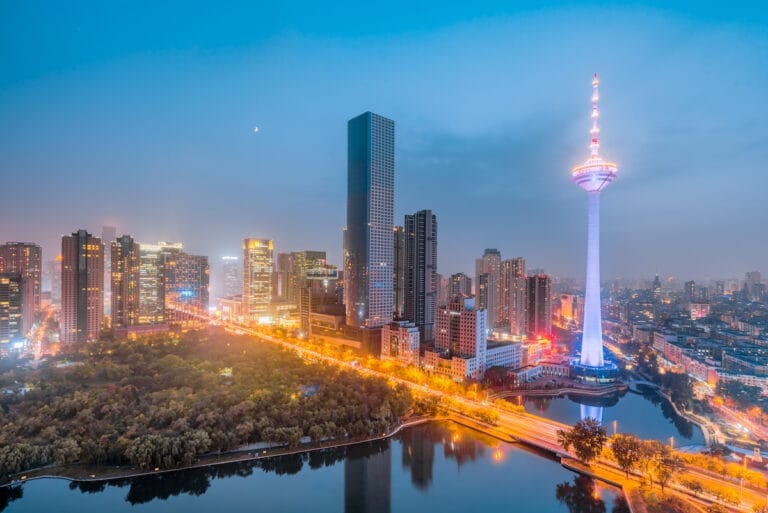
About Shenyang

Shenyang is a city located in northeastern China and is the capital of Liaoning Province. It is known for its rich history and cultural heritage, including the Shenyang Imperial Palace, which is a UNESCO World Heritage site. Shenyang is also a hub for China’s heavy industry, with companies such as the China First Automobile Group and the Shenyang Aircraft Corporation having their headquarters in the city.

Videos

Stories from Shenyang

About Qingdao

Qingdao is a city located in eastern China and is famous for its beaches, beer, and seafood. The city is home to several landmarks, including the Zhanqiao Pier and the Badaguan Scenic Area. Qingdao is also a major port and has a thriving economy, with industries such as electronics, petrochemicals, and machinery.

Videos

Stories from Qingdao

About Xiamen

Xiamen is a city located in southeastern China and is a popular tourist destination known for its beautiful coastal scenery, including Gulangyu Island, which is a UNESCO World Heritage site. The city is also a hub for China’s high-tech industry, with companies such as Huawei and ZTE having research and development centers in Xiamen.

Videos

Stories from Xiamen

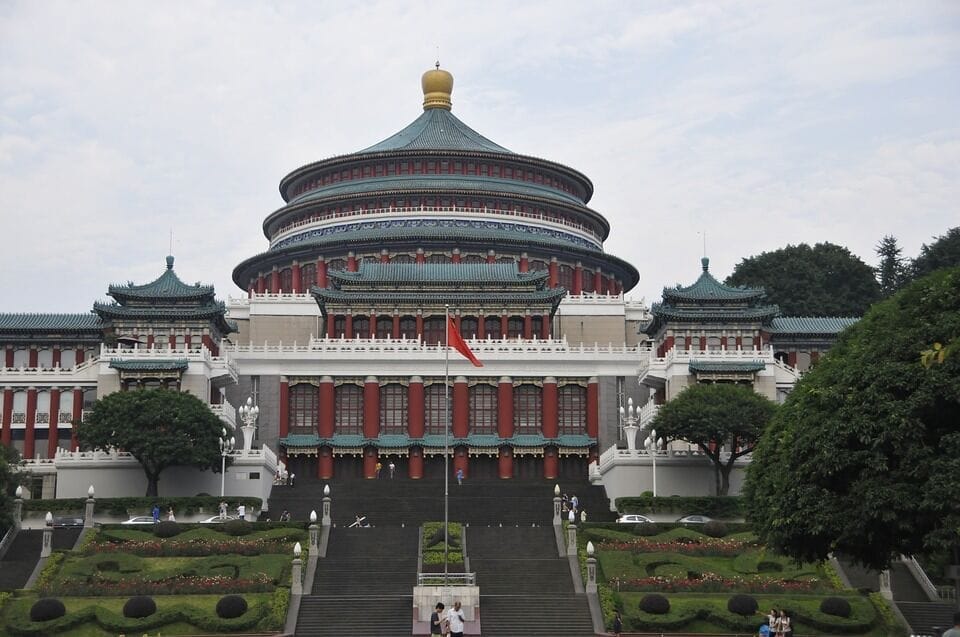
About Chongqing

Chongqing is a city located in southwestern China and is a major economic center in the region. The city is known for its spicy cuisine, especially its hot pot dishes, and is also famous for the Three Gorges Dam, the world’s largest hydroelectric dam. Chongqing is also home to several historic sites, including the Dazu Rock Carvings, which are UNESCO World Heritage sites.

Videos

Stories from Chongqing

About Nanjing

Nanjing is a city located in eastern China and is the capital of Jiangsu Province. It is one of China’s ancient capitals and has a rich cultural history, including the Ming Xiaoling Mausoleum, the Nanjing City Wall, and the Confucius Temple. Nanjing is also a modern city with a thriving economy and is home to several universities, including Nanjing University and Southeast University.

Videos

Stories from Nanjing

About Changchun

Changchun is a city located in northeastern China and is the capital of Jilin Province. It is known for its rich cultural heritage and is home to several historical landmarks such as the Puppet Emperor’s Palace and the Jingyuetan National Forest Park. Changchun is also a hub for China’s automotive industry, with several major automobile manufacturers having their headquarters in the city.

Videos

Stories from Changchun

About Guangzhou

Guangzhou, also known as Canton, is a city located in southern China and is the capital of Guangdong Province. It is one of the country’s largest and most prosperous cities, serving as a major transportation and trading hub for the region. Guangzhou is renowned for its modern architecture, including the Canton Tower and the Guangzhou Opera House, as well as its Cantonese cuisine, which is famous for its variety and bold flavors. The city also has a rich history, with landmarks such as the Chen Clan Ancestral Hall, the Sun Yat-sen Memorial Hall, and the Temple of the Six Banyan Trees. Additionally, Guangzhou hosts the annual Canton Fair, the largest trade fair in China.

Videos

Stories from Guangzhou

About Kunming

Kunming is a city located in southwest China and is the capital of Yunnan Province. Known as the “City of Eternal Spring” for its mild climate, Kunming is a popular tourist destination due to its natural beauty and cultural diversity. The city is home to several scenic spots, including the UNESCO World Heritage Site of the Stone Forest, Dian Lake, and the Western Hills. Kunming is also famous for its unique cuisine, which features a mix of Han, Yi, and Bai ethnic flavors. The city has a rich cultural history, with ancient temples and shrines like the Yuantong Temple and the Golden Temple, and it’s also a hub for Yunnan’s ethnic minority cultures, such as the Yi and Bai peoples.

Videos

Stories from Kunming

About Shenzhen

Shenzhen is a city located in southeastern China and is one of the country’s fastest-growing metropolises. The city is renowned for its thriving tech industry, with companies such as Huawei, Tencent, and DJI having their headquarters in Shenzhen. The city also has a vibrant cultural scene, with numerous museums, art galleries, and parks. Shenzhen is also known for its modern architecture, such as the Ping An Finance Center and the Shenzhen Bay Sports Center. Despite its modernization, Shenzhen also has a rich history and cultural heritage, with landmarks such as the Dapeng Fortress and the Chiwan Tin Hau Temple.

Videos

Stories from Shenzhen

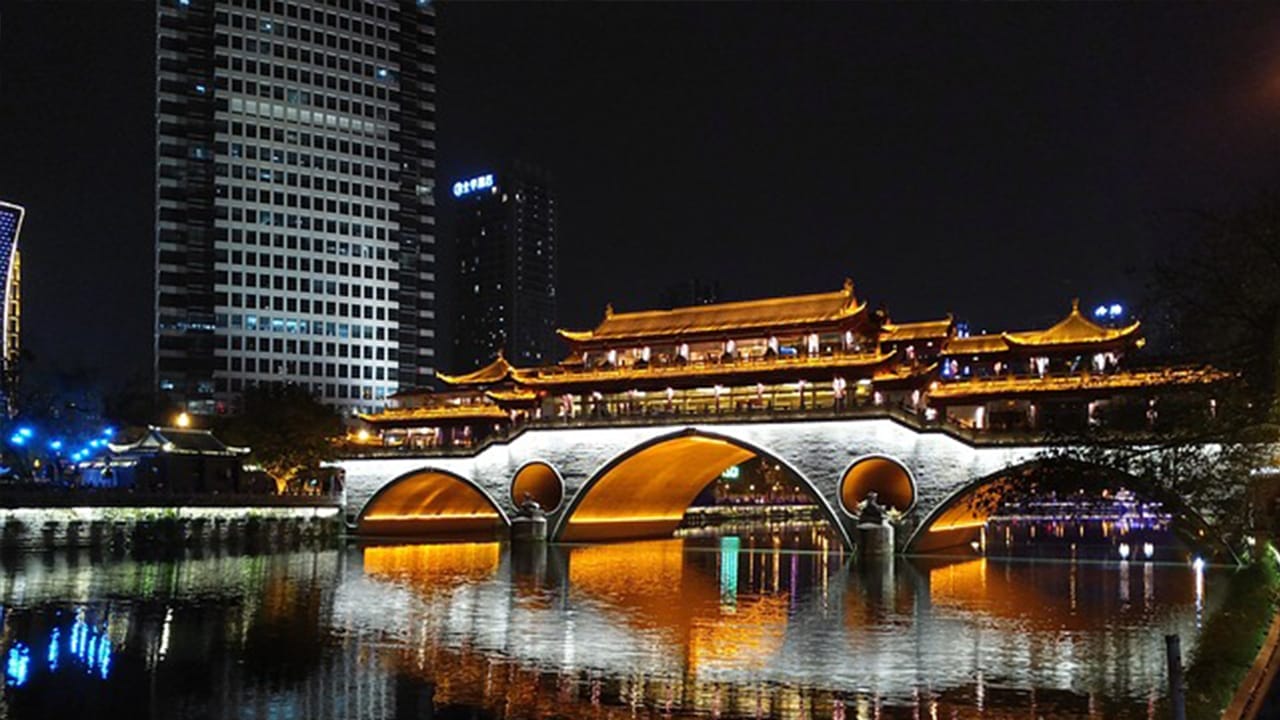
About Chengdu

Chengdu is a city located in the southwestern region of China, and the capital of Sichuan province. It has a population of over 18 million people, and it is famous for its spicy Sichuan cuisine, laid-back lifestyle, and its cute and cuddly residents – the giant pandas. Chengdu is home to the Chengdu Research Base of Giant Panda Breeding, where visitors can observe these adorable creatures in their natural habitat. The city also boasts a rich cultural heritage, with numerous temples, museums, and historical sites scattered throughout its boundaries. Chengdu is a city of contrasts, with ancient traditions coexisting alongside modern developments, making it an intriguing and fascinating destination for visitors to China. 

Videos

Stories from Chengdu

About Beijing

Beijing is the capital city of China and one of the most populous cities in the world, with a population of over 21 million people. The city has a rich history that spans over 3,000 years, and it has served as the capital of various dynasties throughout China’s history. Beijing is home to some of the most iconic landmarks in China, including the Great Wall, the Forbidden City, and the Temple of Heaven. The city is also a hub for political, cultural, and educational activities, with numerous universities and research institutions located within its boundaries. Beijing is renowned for its traditional architecture, rich cuisine, and vibrant cultural scene, making it a must-visit destination for travelers to China.

Videos

Stories from Beijing

About Shanghai

Shanghai is a vibrant and dynamic city located on the eastern coast of China. It is the largest city in China and one of the most populous cities in the world, with a population of over 24 million people. Shanghai is a global financial hub and a major center for international trade, with a rich history and culture that spans over 1,000 years. The city is famous for its iconic skyline, which features towering skyscrapers such as the Oriental Pearl Tower and the Shanghai Tower. Shanghai is also home to a diverse culinary scene, world-class museums and art galleries, and numerous shopping districts. It is a city that is constantly evolving and reinventing itself, making it a fascinating destination for visitors from around the world.

Videos

Stories from Shanghai

give

A short message about partnering with us.